
A practical guide to choosing a useful, considerate beauty gift
Cosmetic Gift Sets: How to Choose the Best Set for Their Routine
A well-chosen set makes it easier to explore a routine, replace a familiar staple, or enjoy a small ritual. The right choice depends less on the number of boxes in the kit and more on what the recipient already likes, can comfortably use, and has room to add.
Shopping for cosmetic gift sets can feel simple until a box promises five steps, a "complete" routine, a new texture, several active ingredients, and a shade you have never seen on the recipient. A gift set can be generous and still miss the mark if it asks someone to change a routine they already like, includes formulas they cannot use, or offers more products than they want to open. The best cosmetic gift sets are not necessarily the largest or most elaborate. They are the ones with a clear use case, understandable contents, and a sensible fit for the person receiving them.
This guide gives you a method for choosing among skincare sets, makeup sets, travel kits, hand-care trios, and small discovery assortments. Start with what the recipient uses and avoids; then compare the format, exact contents, ingredient information, routine burden, and practical details. When you do not know enough to make a responsible guess, choose a lower-commitment gift or ask what they would actually enjoy.
- For a known routine: replace or complement a step they already use.
- For an enthusiast: consider a discovery set with clear sizes and a coherent theme.
- For a sensitive or medically managed routine: do not guess at topical products; ask first.
- For uncertain preferences: choose a hand-care or makeup accessory only when their scent and style preferences are known, or opt for a non-topical gift.

Start with the recipient, not the gift box
A box is packaging. The recipient is the brief. Before browsing, write down what you know in plain terms: Do they use skincare, makeup, both, or neither? Do they prefer a short routine or enjoy trying several steps? Have they mentioned a scent they like, a formula they avoid, or a product they already plan to replace? Do they travel often? Are they interested in Korean beauty, or would a familiar format make more sense?
These questions turn a vague search for "something nice" into a decision about routine fit. A person who buys one moisturizer at a time may appreciate a two-product pairing more than a seven-piece regimen. Someone who loves trying new lip colors may enjoy mini shades; someone who wears the same neutral tint every day may prefer one known shade. A traveler may value portable packaging, but only if the kit includes products they already use or genuinely want to sample.
Use evidence you already have rather than guessing from age, gender, complexion, or a single photo. A person's age does not tell you whether they want a wrinkle-themed set. Skin tone does not tell you what makeup shade they wear. A clean bathroom shelf does not mean they want more skincare. The most useful clues are their own statements, an item they repurchase, or a routine they have described to you.
If you can ask a low-pressure question, keep it specific. "Would you rather try a few lip colors or get a skincare set?" is more useful than "What beauty products do you want?" If the gift is meant to be a surprise, ask someone who knows the recipient's routine and allergies. If that is not possible, stay within the boundaries of what you actually know. A thoughtful, small set can feel more personal than a large box chosen on assumptions.
Think about the recipient's likely use, not the gift giver's excitement. Multi-step sets are appealing to browse because every bottle promises a new step; after the gift is opened, each additional step becomes another decision. If your recipient tends to finish one product before opening another, a set of five different formulas may create clutter. If they enjoy rotating products and reading ingredient lists, the same collection may be welcome. The packaging cannot tell you which kind of user they are.
A useful first filter is to label your knowledge as known, plausible, or unknown. "They asked for a fragrance-free moisturizer" is known. "They like Korean skin care, so perhaps they want a set" is plausible. "They have a skin issue I think this product might fix" is unknown and is not a safe gifting premise. Keep your selection attached to the first category whenever possible.
Choose one clear reason for the set
A gift set usually works best when you can finish the sentence: "I chose this because it helps them." The answer might be to explore a known brand, keep a travel routine together, replace a product they already like, enjoy a coordinated hand-care ritual, or try a few colors without committing to full sizes. If the sentence becomes "because it says it works for everyone," keep looking.
Cosmetic products are generally intended to cleanse, beautify, promote attractiveness, or alter appearance; cosmetic labeling and claims have specific rules in the United States. A product page's wording does not establish that a set treats a disease or is suitable for every person. Keep gift language practical: "a compact set for someone who already likes glossy tints" is more accurate than "a treatment for dry lips." The FDA's [Cosmetics Labeling Guide](https://www.fda.gov/cosmetics/cosmetics-labeling-regulations/cosmetics-labeling-guide) explains required label information and ingredient declarations; it does not certify that a particular set will work for or suit a specific recipient.
For a set with several categories, identify the anchor item. If one cream or color is the main reason to buy and everything else is a bonus, make sure the anchor is genuinely likely to be used. A gift kit with a familiar moisturizer plus smaller related items may be easier to understand than a box containing unrelated cleanser, exfoliant, eye cream, mask, and device. A coordinated "routine" is useful only when the recipient wants those steps and can follow the directions.
One clear purpose also helps you compare alternatives without getting pulled into packaging. A gold-colored box may look celebratory, but the actual contents still matter. A pouch can be reusable, but it does not make incompatible products compatible. A collection of minis can be a good discovery gift for an enthusiast; it can be frustrating for a person who prefers to buy one familiar product at a time. Keep the decision tied to use.
Some popular product-page language sounds more definitive than the evidence justifies. Words such as "repair," "lift," "detox," "anti-aging," "poreless," or "brightening" may appear in cosmetic descriptions. Do not turn those words into promises when you describe a gift. If the main reason for buying the set is an expected medical or structural change, pause and choose a different gift. A cosmetic set should be presented as a set of products to use according to their labels, with appearance and feel varying among people.
It can also help to distinguish between a routine set and a discovery set. A routine set groups steps that are meant to work in an order. A discovery set gives a person a chance to sample several shades, scents, or textures. A refill bundle groups a product with replenishment. A gift box may be only a collection of convenient formats. Those purposes are not interchangeable. The best choice has a reason that the recipient can understand at a glance.

Match the set format to the person's routine
Set names use words such as "system," "ritual," "starter," "kit," "trio," and "gift set," but those words do not tell you how the products fit together. Look past the title and identify each item, its size, and its role. A skincare kit might include a cleanser, toner, serum, emulsion, cream, eye cream, mask, or sunscreen. A makeup set might include several shades, a compact with a refill, a base product, or a finishing product. A hand-care trio can be three versions of one product rather than three routine steps.
Ask whether the contents are distinct steps or multiple versions of one step. Distinct steps create a sequence. They can be useful for someone who wants a ready-made routine and is willing to introduce products carefully. Multiple versions make exploration easier. A set of four mini lip tints can be shared or rotated; a set of four identical ampoules creates more total use of one formula. Neither format is automatically better. The choice depends on whether the recipient wants variety or repetition.
Check whether the kit includes full sizes, minis, foil samples, sachets, or refill units. A set called "five-piece" might count a tool or pouch as one of the pieces. A travel kit can contain five small products that add up to less than one full-size bottle. A compact-and-refill set includes the main case and a duplicate refill, not two different formulas. Count the actual products, then note the volume or weight next to each. This makes it easier to judge what the recipient is receiving.
Consider the order and complexity. A multi-step routine should state what goes first, what is leave-on versus rinse-off, and what is intended for morning or evening use. If the public product page does not make the sequence clear, avoid improvising instructions in your gift note. Direct the recipient to the label and official directions. Do not combine products from the box into a new routine just because they arrived together; the recipient's existing products and personal directions still matter.
People who are new to a routine often benefit from fewer decisions. Someone who already enjoys ingredient-led skincare may be comfortable comparing toner, ampoule, and cream. A beginner may not know which products to use first or whether every step is needed. You can read [The Complete Korean Skincare Routine for Beginners](https://www.theprotoclinical.com/blogs/skincare-guide/complete-korean-skincare-routine-for-beginners) together as background, but do not turn a gift into homework. A gift should not require the recipient to adopt a new multi-step habit to justify its contents.
A practical rule is to let the recipient control how many new items they introduce. If the set contains several leave-on products, the recipient can open them one at a time and follow each product's directions, rather than changing the entire routine on the first day. This is especially sensible for people who already know that their skin reacts to some formulas. The set's packaging should not pressure them to use every item at once.
Set formats can also create repetition. Two face creams may look like variety on the outside, but if the recipient already owns a full moisturizer, they may not use either quickly. A miniature routine can be excellent for travel and still be redundant at home. A gift aimed at makeup lovers may include two base products that do the same job but have different finishes. Look for a set that gives the person a choice, not an obligation to use every item.
If you cannot tell whether products are meant to be layered, compare the directions on their product pages or labels. A set may pair a cleanser with a moisturizer, which is straightforward as separate routine steps. It may also contain several serums or masks with overlapping functions. Do not assume that the brand intended simultaneous use simply because the items are packaged together. When in doubt, preserve individual directions and let the recipient decide which steps fit.
Check skin fit without diagnosing the recipient
"For oily skin," "for dry skin," "for mature skin," and "for sensitive skin" can be useful starting labels, but they are broad descriptions. They cannot replace the recipient's preferences, known reactions, climate, or current routine. One person with dry-feeling skin may prefer a light lotion; another may like a richer cream. A person with oily skin may still dislike a matte finish. A product tagged for sensitivity can still include an ingredient the recipient avoids.
Do not infer a skin type from appearance or assume that skin is a problem to be corrected. Skin characteristics change by area, season, medication, and routine. A gift that names a "problem" on the box may feel like criticism. If the recipient has not told you they want a product for acne, spots, wrinkles, pores, redness, or dryness, do not frame the gift as a solution to that issue. Choose a neutral purpose, such as a texture they already like or a routine step they have mentioned.
Known allergies and exclusions are more important than a marketing category. If the recipient has shared that they avoid fragrance, essential oils, certain preservatives, animal-derived ingredients, or specific colorants, check the current ingredient list on the item itself. Product lists may differ between variants or change over time. A set may include several formulas, and a "sensitive" label does not mean every item fits every sensitivity. If you cannot confirm the exclusion, do not make the purchase on the assumption that the formula is safe for them.
The public product pages for the examples below illustrate why the exact item list matters. One face-and-eye pair identifies horse-derived material and beeswax; a gold ampoule listing discloses fragrance and bee-derived extracts; a hand-cream trio is organized around distinct scents; a lip tint set lists fragrance and colorants. These are not automatically bad choices. They are reminders to match what is listed with what you know about the person.
For a recipient with a diagnosed skin condition, prescription routine, history of serious reactions, or an active dermatology plan, do not use a gift set to suggest a new treatment. A set is not a treatment plan. If they have a clinician-approved routine, ask what they can use or choose a non-topical gift. This approach respects their own choices and avoids placing the burden on them to explain why a present is unsuitable.
For someone who describes their skin as reactive but has not given a list of exclusions, ask about the category before buying. You might ask whether they prefer fragrance-free products, whether they would like to choose their own shade, or whether a hand-care item is welcome. If asking would reveal the surprise, choose something that does not require guessing about facial formulas. A broad set is not a universal set.
A gift buyer does not need to label the recipient's skin as oily, dry, combination, or mature to choose well. You need the person's own preference, not an outsider's diagnosis. If they use a product you can identify, match that product's format and routine role. If not, avoid trying to reverse-engineer a skin type from photos, age, or a bathroom shelf. Read [How to Choose Korean Skincare for Your Skin Type](https://www.theprotoclinical.com/blogs/skincare-guide/how-to-choose-korean-skincare-for-your-skin-type) for general comparison context, but keep the recipient's reported needs in control.
Where a product contains an ingredient derived from an animal or insect, that fact may matter for ethical, religious, or dietary reasons even when no allergy is involved. "Vegan" and "cruelty-free" are separate claims and should not be inferred from a brand's image or the product category. Look for an explicit, current statement and verify the exact product rather than assuming that every item in a line shares the same status. If the information is missing, do not promise the recipient that the product meets a value they have expressed.
Read the formula and label, not only the front of the box
Packaging often emphasizes an ingredient, benefit, or theme. The full ingredient declaration and directions provide more useful selection information. Look for the complete list for every formula in the set; one appealing ingredient on the carton does not describe the whole formula. If the product comes in more than one shade or type, make sure the page you are reading matches the specific option you intend to give.
Ingredient lists can help someone avoid known ingredients, but they do not reliably predict how every person will respond. "Natural," "clean," "dermatologist tested," "hypoallergenic," and "gentle" should not be treated as guarantees for an individual. A fragrance-free preference, a history of contact allergy, or a clinician's advice is more actionable than a broad marketing term. When an exclusion matters, verify the exact current formula rather than relying on a product family name.
Fragrance deserves special attention in gifts because scent is subjective and fragrance ingredients can be a personal exclusion. A floral or citrus scent may be delightful to one person and unwelcome to another. Some hand-care sets intentionally vary their fragrances. If you know that the recipient likes scented products and has not mentioned an exclusion, a scent assortment can be a thoughtful choice. If you do not know, avoid using fragrance as the reason the set feels "gift-worthy." A neutral choice is often more considerate.
Look for directions and warnings alongside the formula. A rinse-off mask, a leave-on cream, and a makeup tint have different use patterns. A device set may include a charging cable and specific operating instructions. A mask with a long wear time should be used according to its own package directions, not according to a general idea that longer must be better. The recipient should be able to find the directions for every item without relying on your interpretation.
For a set containing sun-care products, distinguish sunscreen from makeup with SPF. Makeup is often applied differently from a separately labeled sunscreen, so do not present a tint or cushion as a complete substitute for the recipient's sunscreen directions. If the recipient wants a sun-care set, make sure they can read the product's stated use and rating on the individual package. Avoid combining sunscreen with other products or reducing its labeled application to make a gift set feel more convenient.
Claims need the same scrutiny as the ingredient list. Cosmetic language generally concerns cleansing, appearance, feel, or attractiveness; it should not be repeated as a promise to cure, prevent, or treat disease. A description that says a face mask helps skin look smoother is not the same as evidence that it changes skin structure. "Pore care" on a label does not establish a lasting reduction in pore size. A wrinkle-themed box does not guarantee that lines will disappear. Describe what the set contains and how it is intended to be used, not a result the seller has not substantiated.
The FDA's labeling guide outlines how product identity, quantity, warnings, and ingredient information appear on cosmetic labels. Use that as a reminder to inspect the actual package and full product details, especially when the recipient avoids a specific ingredient. The guide is about labeling requirements; it does not confirm that every cosmetic is free from risk or that a particular formula suits a particular person.
Do not make ingredient concentration guesses from a product name or from the position of a marketing claim. If the product page does not state a percentage, do not estimate one. If a name says "gold," that does not mean the formula is mostly gold. If a set mentions collagen or peptides, do not infer that the product has a medical effect. Stick to documented contents and clearly stated use.
Some gift sets mix several products whose ingredients overlap. That may be intentional, but it is not a reason to assume they should all be used together. The recipient can decide whether each product has a place in their routine. If you include a note, make it easy for them to try items individually and keep the product pages or packages so they can check instructions and ingredients. This is more useful than inventing a "morning and evening" schedule on their behalf.

Match the size and commitment to the recipient
Set size affects more than how much product is in the box. It affects storage, the amount of time someone has to use the products, travel convenience, and whether a formula feels like a manageable experiment. A few minis can lower the commitment to trying a new texture. Full sizes make more sense for an item the person already uses. Refill sets can be useful to someone who likes a product and knows the compatible device or compact.
Compare total quantity as well as piece count. Four containers do not automatically provide four different uses; a set may contain multiple units of the same formula. A compact plus refill is a replacement arrangement, not a set of two looks. A three-product skincare set may contain a mix of sizes, so the largest number on the package does not explain how long the whole set will last. Write out each item and size when making a comparison.
Mini formats are helpful for travel and discovery, but they can also be too small for someone hoping to replace a daily product. Travel sizes may run out before a person has formed an opinion. A discovery kit is most useful when the recipient can test a limited amount, compare alternatives, and still choose a full size later. Check whether a set gives that freedom or whether it encourages using the contents in a fixed sequence.
Full-size bundles have the opposite trade-off. They can offer more product in familiar steps, but they create a larger commitment to formulas the recipient may not know. If they already use those exact items, a replenishment bundle can be practical. If they have never tried them, the bigger package is not automatically a better value. A high-volume set can remain unused if the texture, scent, finish, or instructions do not fit their preferences.
Refills require compatibility. Check that the recipient already owns, or wants, the matching compact or dispenser. A refill does not have much gift value if the case is the part they need. A set that includes both can be convenient, but it may still duplicate a product they have. If the recipient has a preferred compact or shade, do not assume that a similar-looking refill will fit it.
Makeup shades deserve a different size check. A mini set can feel generous when it gives the recipient several usable colors in a format they will carry. It can also be a collection of colors they never wear. Compare the shade names and actual swatches, while remembering that screens and lighting can change how color appears. A sample set is a better choice when it offers true experimentation rather than four variations of a shade the person already owns.
Consider how often the item is used and how quickly the recipient finishes similar products. A hand cream may be carried in a bag and used repeatedly. A face mask may be a once-in-a-while option. A specific makeup shade may be used every day or never opened. One high-rotation item in a small set can be more practical than multiple niche products. If you know the recipient has a favorite category, choose a set that extends that category instead of forcing a new routine.
Judge value by use, not by the number printed on the carton
"Five pieces" and "complete routine" describe a package, not necessarily its value. To compare sets, list what is included, how much of each product there is, and whether the recipient wants those items. A smaller set of known favorites may be more useful than a larger assortment of unfamiliar formulas. A good value should be calculated after you account for what the person is likely to use, not from the contents count alone.
Keep retail prices out of evergreen gift advice because they can change with region, currency, promotion, tax, and shipping. Instead, compare useful quantity. How many items are full size? How many are sample or travel size? Is the set a refill, a duplicate, or several different products? Does the packaging include a useful reusable item, or does the recipient pay for decorative presentation they will discard? These questions remain helpful even when a retailer changes its pricing.
A "value" set can still be wasteful if it includes three products that compete for the same step. Conversely, a small set may be a strong choice if it has one item the recipient already wants and one low-commitment addition. The answer depends on likely use rather than the number of containers. If you are choosing for someone who already owns a detailed routine, duplicating a cleanser or moisturizer might be unnecessary even if the set looks complete.
For a set with several scents or shades, value includes the likelihood that the recipient will use more than one. A scent trio is less useful if they strongly prefer fragrance-free products. A four-shade tint set is less useful if they consistently wear one tone. An item count is not the same as useful variety. Check how different the options are and whether the recipient has expressed interest in exploring them.
Think about when the gift can be used. Full-size products may need months of regular use. A kit with a specified expiry or period-after-opening symbol has a finite window. A travel set may be most useful before a scheduled trip; a seasonal fragrance set might be welcome only during a particular time of year. Do not assume the recipient will open every product at once. Packaging should make it easy to identify items and their directions when they are ready to use them.
Shipping and logistics can also change whether a gift works. Product availability can vary by destination, delivery rules, and the selected item; some devices or formulas may have special shipping requirements. Check the live item page and checkout details at the time of purchase. Do not write an expected delivery date into a gift note until it is confirmed for the destination. This is especially relevant for a gift intended for a specific event or trip.
If the set has several separate products, consider whether the recipient has room to store them. A person with a small bathroom shelf may prefer a compact duo or a reusable travel pouch over a deep box of bottles. A makeup user may appreciate a palette that fits in a small bag; someone with a fixed station may be happy with a larger arrangement. Storage may seem mundane compared with an ingredient story, but it determines whether the set fits into an everyday life.
Packaging can matter when the item is a gift. A presentation box, printed note, or coordinated pouch may make opening the set feel special. But presentation cannot solve formula fit. Treat the outer box as one part of the gift, and the products as the decision that matters. A pretty set that contains the wrong shade, fragrance, or routine steps is still the wrong set. If packaging is a major reason you are choosing it, check what remains after the box is opened and whether the contents still feel useful.

Count useful variety, not just pieces
Two sets can have the same piece count and create very different experiences. One may repeat the same formula in several sizes; another may offer distinct formats the recipient already enjoys. Write down the items by use rather than by package count: one familiar daily product, two optional samples, a compatible refill, or several shades. This simple inventory reveals whether the set gives useful choice or simply asks the recipient to store more products.
Then ask whether variety solves a real preference. A person who likes choosing between textures may enjoy an assortment. Someone who buys the same moisturizer repeatedly may value a familiar formula in a convenient bundle. If you cannot identify a likely use for each item, the additional pieces are not automatically a benefit.
Choose a category before comparing individual sets
Start by deciding which broad category is least likely to surprise the recipient. If they have a visible skincare routine and have mentioned products they use, a skincare set may make sense. If they wear makeup and have a clear preference for shades or formats, a makeup set may be easier to personalize. If face products are too uncertain, hand care can be a smaller, more visible category-but only when fragrance and ingredient preferences are known. A non-topical gift is the most respectful choice when you do not have enough information.
Skincare sets are most useful when the recipient has a routine preference you can identify: a hydrating toner they already enjoy, a moisturizer they repurchase, or a brand they have asked to try. Look for a set that supports that known preference rather than one that claims to "fix" a skin concern. If it includes several leave-on products, make sure the recipient can read each label and use the items in their own order.
Makeup sets are easier to match when the recipient already uses the format: cushion compact, liquid tint, brow product, powder, or setting spray. Shade-sensitive items should be chosen from current swatches and shade names, not guessed from skin tone alone. For base products, pay attention to coverage, finish, undertone, and whether a refill is compatible. Our [Korean cushion makeup selection guide](https://www.theprotoclinical.com/blogs/skincare-guide/how-to-choose-korean-cushion-makeup-compact-refill-shade) reviews compact, refill, shade, and compatibility considerations.
Hand-care sets can be a good option for someone who uses hand cream and likes scent variety. They still require ingredient and fragrance screening. The format can be easier to share or carry than a face-care routine, but do not assume that hand skin has no sensitivities. If the recipient has told you they avoid fragrance or certain ingredients, choose another option rather than hoping that a pleasant scent will compensate.
Mask or treatment kits often feel like an "experience" gift. They can work for a person who already likes that format, checks directions, and has room in their routine. They are less suitable as surprise solutions for acne, redness, or other concerns. A mask's wear time, whether it rinses off, and whether it includes exfoliating ingredients matter more than how luxurious the photos look. The official Korean face mask collection groups sheet, clay, and sleeping formats; compare the product's own directions before choosing.
Travel kits are convenient for someone who travels and wants familiar routine steps in smaller sizes. For someone who has not asked for skincare, a travel kit can still be a group of unfamiliar products. Consider whether the person already uses those products, whether the kit includes enough quantity for the intended trip, and whether the directions and container sizes fit their travel plans. Do not infer that every small bottle is travel-ready for every mode of travel; check current rules and product packaging where relevant.
Sets with devices or tools require extra questions. Is the device compatible with the recipient's routine? Are there operating and cleaning instructions? Does the package include a battery or charger? Are there shipping limitations? Is the intended use clear? A tool can make a gift feel distinctive, but it also creates a learning step and perhaps ongoing maintenance. Do not describe a cosmetic device as changing skin structure, increasing ingredient penetration, or delivering medical treatment unless those claims are clearly supported and appropriate.
For a recipient whose preferences you do not know, choose a format that does not ask them to disclose or address a perceived skin problem. The category should be easy to enjoy on their terms. If even that is uncertain, a gift card or a non-cosmetic present is more personal than pretending to know which formula they need.

Good gifting makes room for the recipient to choose when, how, and whether to use each item.
Ten official examples, grouped by the decision they illustrate
These official storefront examples span coordinated routines, a travel kit, a hand-care trio, repeated mask formats, and two single-product options. They are format examples, not a ranked list or skin-type recommendations. A broad routine or focused formula only makes sense when the recipient already wants that kind of product. Check the current product page for its exact variant, ingredient list, directions, and delivery details. Product names and marketing language do not guarantee a result.
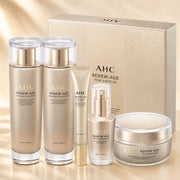
AHC Renew-Age Total 4-Step Gift Set + Eye Cream
The official listing groups toner, emulsion, ampoule, cream, and eye-care formats. A multi-step set makes sense for someone who already wants a coordinated routine; compare each item and size rather than relying on the piece count.
View set details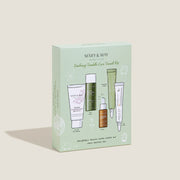
MARY & MAY Soothing Trouble Care Travel Kit
A five-piece travel-size format listed with cleanser, toner, serum, sunscreen, and gel cream. It may fit a traveler who already wants these steps; the recipient should review every formula and direction individually.
View set details
Huxley Hand Cream Trio Gift Set
Three 30 ml hand creams with distinct scent profiles. This category-specific set fits someone who already uses fragranced hand care; skip it when fragrance preferences or exclusions are unknown.
View set details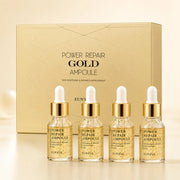
EUNYUL Power Repair Gold Ampoule Set
Four 17 ml bottles of one ampoule formula. The listing notes fragrance and bee-derived extracts; its gold-purity wording refers to the gold ingredient, not the percentage of the total formula. Choose only if the recipient already wants this kind of product.
View set details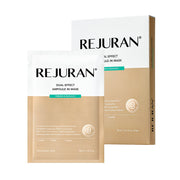
REJURAN Dual Effect Ampoule In Mask, 30 ml x 5
A repeated mask format rather than a mixed routine. The product name signals the listing's positioning, not a guaranteed change; check the full ingredient declaration and package wear time before gifting.
View product details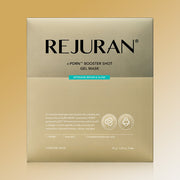
REJURAN C-PDRN Booster Shot Gel Mask, 35 g x 5
Five gel masks of one format, suited only to a recipient who already uses this kind of mask. Check the current ingredient list and directions; the product title does not establish suitability for sensitive skin.
View product details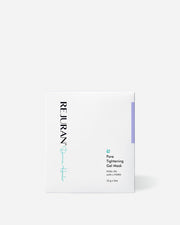
REJURAN Derma Healer Pore Tightening Gel Mask, 32 g x 5
A five-piece targeted mask format. Treat "pore tightening" as wording in the product name, not evidence of a lasting pore-size change. It is a poor surprise gift when the recipient has not asked for a mask or its featured concern.
View product details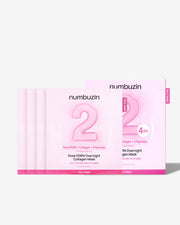
numbuzin No.2 Rose PDRN Overnight Collagen Mask, 37 g x 4
A multi-use overnight-mask category example. Confirm whether the recipient uses leave-on masks and follow the current package instructions; an overnight product is not interchangeable with a rinse-off mask.
View product details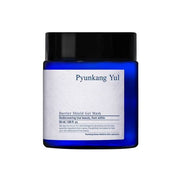
Pyunkang Yul Barrier Shield Gel Mask, 50 ml
This is a single 50 ml gel-cream mask, not a kit. The product page describes a thin daytime layer or a more generous final evening layer. Choose it only when the recipient already wants this texture and has checked its ingredient list.
View product details
Pyunkang Yul Red Ginseng Propolis Moisturizer, 30 ml
A single moisturizer is not a set. The official page advises avoiding the product for people who react to bee-derived ingredients. This is only a sensible gift when the recipient has named or already uses this exact type of formula.
View product details
For travel, choose convenience without assuming a new routine
A travel kit is easy to understand as a gift because its use occasion is visible: a trip, a gym bag, a weekend away, or a work commute. Still, convenience depends on the recipient's habits. Some people decant familiar products into reusable containers. Others prefer to carry the products they already own. A travel kit is most useful when it contains familiar steps or when the recipient has expressed an interest in trying that specific line.
Check how much of each product is included. A kit may contain enough for a weekend, a longer trip, or only a few trials. Avoid describing the amount as "enough for a week" unless the product page or package says so. People apply different amounts, use items at different frequencies, and may have directions that vary. You can say that the set is marketed as travel-size and leave the expected duration to the recipient.
Look at the package, container closure, and whether the items can be carried together. If an outer pouch is included, that may make storage easier; if not, the recipient can still choose how to pack it. Do not promise that a container meets current airline liquid rules unless you have checked the exact package dimensions and current travel regulations. These rules and enforcement can change, so the recipient should verify their itinerary and destination.
Travel is also when people may want fewer variables. A trip can be a poor time to introduce several unfamiliar face products, especially for a person who knows their skin reacts to change. The recipient can take only the items that fit their established routine. A set does not require simultaneous use. If you write a note, phrase it as "thought this compact format might be useful for your next trip" rather than "start this new routine while traveling."
A travel kit might be better as an addition to a known favorite than a standalone surprise. If the recipient already uses a cleanser and moisturizer, a small kit of those exact categories can be easier to incorporate than a fully new regimen. If they have said they want to sample a line, then the variety may be the point. Distinguish between a gift that supports their routine and a gift that asks them to abandon it.
Where a kit includes sunscreen, note that it remains a product with its own label, amount, reapplication, and use instructions. Do not treat sunscreen as just another mini in a routine bundle. If the recipient is particular about sunscreen feel, white cast, finish, or eye comfort, a formula chosen without that knowledge may not be useful. Let the person decide whether it fits their needs.
If the kit includes several types of products, make sure they can be separated and identified. A gift recipient should be able to tell a rinse-off cleanser from a leave-on cream or mask, even after removing the outer box. If individual labels are small, keep packaging and product instructions together. This is a practical point, not a reason to use everything at once.
For anyone managing a condition or using prescription products, travel convenience does not override their established plan. A smaller package is not inherently gentler or safer. Encourage them to keep using what their clinician recommended and treat a travel kit as an optional gift. They can leave it unopened if the timing is not right.
Use this comparison method before you buy
Once you have one or two candidates, compare them on the same questions. This prevents a polished box from winning simply because its photos are more persuasive. You do not need a complicated spreadsheet; a short note is enough. Record the recipient's known preference, the contents, sizes, routine role, ingredient checks, and whether the set is easy to return or exchange if the shade or format is wrong.
| Decision | Ask this | Good evidence | Pause if |
|---|---|---|---|
| Recipient fit | Have they said they use this category or format? | A product they repurchase or a direct preference they shared | You are relying on age, gender, appearance, or a guessed concern |
| Set purpose | Is it a routine, refill, travel kit, or discovery assortment? | Each item has a distinct, understandable role | The packaging is clear but the actual contents are vague |
| Size and value | What are the item sizes and total quantities? | Full sizes, minis, and refills are counted separately | Piece count is the only reason it looks like a good deal |
| Formula fit | Does it conflict with a known exclusion or preference? | Current ingredient lists and directions for every item | "Gentle," "natural," or "for sensitive skin" is being treated as a guarantee |
| Routine burden | How many new steps does the gift ask them to add? | The recipient already wants those steps or can choose one at a time | The gift note implies they must use every item together |
| Practical details | Will they store, carry, open, and finish the set? | Clear package, compatible refill, useful sizes, verified delivery | Battery, shade, fragrance, shipping, or instructions remain unclear |
One simple scoring approach is to rate each candidate as strong, uncertain, or weak in four areas: known preference, content clarity, formula fit, and likely use. A set with three strong areas and one manageable uncertainty may be reasonable. A set with two or more weak areas should not win just because it is popular or elaborate. This is not a medical score or a statistical prediction. It is a way to make assumptions visible before spending money.
If a candidate is strong on known preference but uncertain on formula, check the complete ingredient list or ask the recipient. If a candidate is strong on formula details but weak on routine fit, choose a smaller format or a different category. If both sets look appealing but the recipient has not shared any preferences, the information gap remains. You do not solve it by buying the larger one.
You can also compare the *number of unknowns*. A set with ten products may create ten questions about shade, scent, routine order, and ingredients. A small duo may create fewer. A known favorite plus a small complementary item can reduce uncertainty. When the set is a gift, reducing unresolved questions is part of the value.
For makeup, add separate questions about shade and finish. Does the recipient wear a tint, cushion, or powder? Are the swatches close to what they currently use? Can they choose a shade after receiving the gift? Does a set include a refill for the exact compact? Shade uncertainty is not solved by reading the skin-type label. For a makeup gift, the format may be known while the color remains a guess.
For skincare, consider the routine step before the ingredient theme. If the recipient already uses toner and moisturizer, the question is whether they want a new toner or moisturizer, not whether an ampoule has a popular ingredient. For a person who uses only a cleanser and sunscreen, a five-step gift set may be a poor match. The item list matters more than the trend.
For scents, compare the set's range with the recipient's preferences. A trio with three distinct fragrance profiles may be useful to someone who likes to switch scents or share products. It may be a poor gift for someone who wears only unscented products. A "gift set" label does not signal a scent-free formula. Check the ingredient list and description for the exact items in the set.
For a device bundle, add compatibility, instructions, charging, and shipping to the comparison. If the set has a battery or requires a particular routine, these details can determine whether it arrives or gets used. Do not choose a tool because it looks innovative without understanding the basic practical requirements. If instructions are incomplete, avoid giving the device a clinical interpretation.
How to make a skincare gift feel considerate
Do not write a note that names a skin issue the recipient did not ask you to address. A gift note that says "for your pores" or "to fix those lines" can feel more like a critique than care. Keep the framing about the occasion or the format: "I remembered you like trying small sets," "I chose these because you said you enjoy hand creams," or "I thought this travel size might be convenient." The words should reflect what the person told you, not a diagnosis you made for them.
Give the recipient room to choose whether to use every item. A thoughtful note can say, "Use whatever fits your routine; I kept the product pages in case you want to check the ingredients." Do not pressure them to demonstrate the gift, report results, or follow a routine you designed. They may keep it for later, exchange it, pass it along, or decide it is not a fit. A good gift does not require a review.
Keep receipts or order details available, especially for shade-dependent makeup. Exchange policies and delivery conditions change, so review the current terms at the time of purchase instead of promising an exchange. If the product is a set with variants, make sure the selected option is the one you intended. A small packing error can make an otherwise careful gift unsuitable.
If you include a printed product list, keep it factual: product names, formats, and where to find the directions. Do not write treatment claims, ingredient instructions, or a mixing routine you did not verify. If the package has a printed ingredient declaration, leave it accessible. That lets the recipient decide what to open, what to keep, and what to avoid.
A gift can still be meaningful when it is not topical. If you do not know the person's allergies or routine, a soft headband, a reusable travel pouch, a cosmetic organizer, or a gift card lets them choose what they want. Do not assume that a non-product accessory is less thoughtful. Matching your level of knowledge to the level of commitment is part of choosing well.
When buying a set for a colleague, acquaintance, host, or someone whose routine you do not know, choose a neutral category and avoid messages about their appearance. Consider whether the item is easy to share or exchange and whether the scent, shade, or formula demands a personal choice. A gift card to a retailer they already use may be more respectful than a product selected from a trend list.
When buying for a close friend or family member, familiarity does not remove the need to check. People change routines, develop new sensitivities, follow new treatment plans, or stop liking scents they once enjoyed. A remembered preference is useful, but it is not permanent consent. Ask before choosing a product that depends on a sensitive detail.
Be thoughtful with cultural or religious preferences. Ingredients derived from animals, insects, or specific sources can matter to the recipient even when a product is otherwise popular. Do not infer these preferences from someone's identity. If they have told you about an exclusion, verify the actual product. If you do not know, ask without making assumptions or pick a non-topical option.
Where to browse by format or routine step
These official collections are useful for narrowing a category; individual product pages still contain the details needed to make a decision.
Collections help you browse by product type or concern. They do not confirm that a product is appropriate for a particular person. Open the individual page for exact set contents, directions, ingredient information, available variants, and destination-specific delivery details. Do not assume that every listing in a collection has the same ingredients or claims.
If the recipient's interest is a routine rather than a particular product, start with the routine step they already use. Browse [serums and ampoules](https://www.theprotoclinical.com/collections/serums-ampoules) only if they want a serum step; browse [face moisturizers](https://www.theprotoclinical.com/collections/face-moisturizers) if they have mentioned a moisturizer; browse [masks](https://www.theprotoclinical.com/collections/masks) if they already enjoy masking. This is a more grounded path than choosing a popular ingredient and looking for a reason to recommend it.
For makeup, the [makeup collection](https://www.theprotoclinical.com/collections/makeup) can help you compare formats, while the product page is necessary for colors and included refills. If eye products are in scope, browse the [eye-care collection](https://www.theprotoclinical.com/collections/eye-care); if scent-led hand products are more appropriate, use the [hand and foot care collection](https://www.theprotoclinical.com/collections/hand-foot-care). The person still chooses how those products fit their own preferences.
Common mistakes to avoid
- Buying by the word "gift." A gift-box label says nothing about whether the contents fit. Read the entire item list.
- Assuming more pieces mean better value. Count useful products and their sizes. A set can include several items the recipient does not need.
- Guessing a skin concern. Do not buy a product to correct a feature the person has not asked to address.
- Treating "sensitive" as a guarantee. Check each formula for known exclusions and let the recipient decide whether it suits them.
- Choosing a scent because it smells good to you. Fragrance is personal. Verify that the recipient enjoys scented products.
- Confusing a refill with a new product. Confirm that the recipient owns the compatible case or device.
- Assuming every item belongs in one routine. Follow the directions for each product and do not invent a layering order.
- Buying a shade from a photograph alone. Screen and light alter color. Use the recipient's known shade preference where possible.
- Making a medical promise. Describe the product as a cosmetic and avoid claims about treating disease or permanently changing skin.
- Ignoring delivery details. Destination, battery, product format, and current availability can affect fulfillment; verify live details when you buy.
A short pause before checkout can reveal whether a set is truly a match. If you cannot explain why the person would use the format, if ingredient information is incomplete, or if the gift depends on an appearance concern they did not raise, step back. A smaller known favorite or a choice-based gift can be more useful and more considerate.

For makeup sets, the format can be known while the shade is not
Makeup gifting has a useful advantage: many formats are easy to identify. You may know that the recipient uses lip tints, cushions, brow products, or setting products. That still leaves questions about undertone, finish, coverage, wear, and shade. A familiar format does not make an unfamiliar color a safe guess.
For color products, look at current swatches in more than one lighting condition if the official product page provides them. Remember that a monitor and a phone can display color differently. If you know a product name or shade they already own, compare the listed shade names and undertone descriptions rather than trying to infer a match from their face. If shade choice is still uncertain, a set with varied minis can be a discovery format only if the recipient likes trying different colors.
For complexion products, compare finish and coverage separately from shade. Some products are sheer, some add more coverage, and some are intended to set makeup rather than act as foundation. A colorless finishing powder set is not a skincare set. A cushion with an SPF label still should not be described as the recipient's full sunscreen routine. The recipient decides how each product fits.
Refills are another practical detail. A compact-and-refill set can be useful if the recipient wants both pieces and the product exactly matches their preferred format. A refill is less useful if the recipient does not own the right case. Check the product page for what is included, whether a shade is chosen, and how the refill is installed. Never assume that similarly shaped compacts use interchangeable refills.
A finishing spray or powder may make sense for someone who has told you they want to change how makeup wears or looks. It is not a universal gift because people differ in finish preferences and product tolerance. A matte finish may be welcome to one wearer and uncomfortable to another. If you choose a finishing product, the [setting spray format guide](https://www.theprotoclinical.com/blogs/skincare-guide/how-to-choose-korean-makeup-setting-spray-fixer-size) can help you compare format and size; the recipient's own preference should still decide.
Makeup sets are most considerate when the recipient already uses the category or can exchange a variant. A gift that includes shades they love can be fun; a gift that silently instructs someone to wear a new look can feel prescriptive. Frame it as something they might enjoy experimenting with, not a correction to their current appearance.
Questions to ask when you are choosing between two sets
When two options both look plausible, use the questions below in order. The first answers should eliminate most mismatches before you compare design or product count.
- Which item is the reason I am buying this? Name the product or experience. If the answer is only "the box looks complete," read the contents again.
- Did the recipient ask for this category? A direct preference is stronger evidence than a guess based on skin type, age, or the popularity of an ingredient.
- Could any listed item conflict with a known exclusion? Check the exact formula, not only the set name. If an important ingredient is unclear, pause or ask.
- How many unfamiliar steps are included? More steps create more questions about timing, texture, and whether products should be used together.
- What are the sizes? Compare the full-size and mini items separately. A piece count alone does not indicate total useful quantity.
- Would the recipient prefer variety or one familiar product? Discovery sets and replenishment bundles serve different kinds of shoppers.
- Can the set be opened gradually? The recipient should be free to try items individually instead of feeling obligated to introduce every formula at once.
- Are there shade, scent, device, refill, or delivery variables? Resolve what you can from the individual product page and leave the rest to the recipient.
- Would a non-topical gift be more personal? If you are guessing about a sensitive routine, letting the recipient choose is a useful form of care.
Use the answers to choose the set with the clearest fit, not the one with the most persuasive description. If neither option has a known use case, you do not have to pick one. A gift card, a tool, or another category may be a better match.

Ask one useful question when the fit is uncertain
You do not need to ask someone to describe their skin or disclose a health detail. Ask about the gift category instead: "Would you enjoy trying a small skincare set, or would you rather choose a shade or formula yourself?" If scent matters, ask whether they prefer fragrance-free products or already have a favorite scent. A simple preference question can protect the surprise while leaving private information private.
If the answer is "I would rather choose," treat that as useful guidance. Offer a retailer or brand they already use, give a choice-based gift, or select something outside skincare. A recipient should not have to accept a product merely because the giver has already imagined how it will fit.
When to choose something other than a cosmetic set
Choose a non-topical gift when you do not know the recipient's product preferences and the set depends on a particular formula, fragrance, shade, or routine. This is especially true when a person has told you they manage a skin condition, avoid specific ingredients, or use prescription products. They may appreciate that you respected their routine more than they would appreciate a surprise box they cannot use.
A gift card works best when it lets the person choose from a retailer or brand they already use. An accessory can also be useful if it does not require a particular formula or shade. If you choose an organizer or travel pouch, think about whether the recipient actually travels or needs storage. An accessory is not automatically a safer fit, but it usually leaves more room for personal choice.
Ask first when you want to give something expensive or when the recipient has a known sensitivity. A direct question can be warm rather than clinical: "I'd like to pick a skincare gift, but I don't want to guess at your routine. Is there a product category you would enjoy?" This gives the person control without asking them to disclose a diagnosis or explain their skin.
If you want to preserve the surprise, ask someone the recipient has already trusted with those details. Do not ask a third person to investigate private health information or infer what the recipient "needs." The goal is to confirm a preference, not to diagnose. When the answer is still uncertain, choose a flexible option.
A cosmetic gift set should feel like an invitation, not an assignment. The person receiving it can decide when to open it, which parts to try, and whether it belongs in their routine. If the gift cannot allow that freedom, it may not be the right gift.

How to leave the choice with the recipient
If the routine is personal, a small amount of choice can make the gift feel more thoughtful. Choose a product family the recipient already likes, include an exchange option when available, or give a gift card so they can select a shade or formula themselves. This does not make the gift impersonal. It signals that you want them to receive something they can actually use.
For a surprise, choose an item that reflects a preference they volunteered rather than one you observed from a distance. "You mentioned you enjoy trying lip tints" gives a stronger basis than "I thought your skin looked dry." The difference is respect. One repeats the recipient's own interest; the other interprets their appearance.
Keep the note open-ended. Say that the product is optional and that you kept the details in case they want to check the contents. Avoid a plan for how they should apply it or when they should report back. Do not ask for before-and-after photos. The recipient owes no demonstration or result.
Choice is especially helpful when a product is shade-dependent or when a set contains several categories. The person may prefer one product and not another, or might save the set for a different season. Their timing is their decision. A gift should support enjoyment, not add pressure to finish a box.
Frequently asked questions
What makes the best cosmetic gift sets?
The best fit is a set the recipient is likely to use: one that matches a preference they have shared, shows the exact items and sizes, and does not conflict with a known ingredient, scent, shade, or routine exclusion. Piece count and decorative packaging are not enough to establish fit.
Is a skincare gift set a good idea for someone with sensitive skin?
Only when you know the recipient's preferences and can confirm the exact ingredients for every item. A "sensitive skin" label is not a guarantee that a formula will suit a particular person. If they have a diagnosis, known allergy, or clinician-directed routine, ask first or choose a non-topical gift.
Should I choose a large set or a travel-size kit?
Choose based on what the person wants to do. A travel-size kit can work for someone who travels or likes sampling; full sizes may fit someone who already uses those products. Compare individual amounts and the intended use rather than assuming more containers mean more value.
How do I choose a cosmetic gift set for someone who is new to skincare?
Start with a simple category they have expressed interest in and avoid a complex routine that requires several unfamiliar steps. Check the order and directions for each item. A beginner does not need every step in a multi-piece routine, and the gift should not require them to adopt one.
Are mini sets better than full-size gift sets?
Neither format is automatically better. Minis lower the commitment to exploring a formula or shade, while full sizes are more practical for products the recipient already uses. Refill sets make sense only when the person wants the compatible product and case.
What should I check before buying a fragrance-containing set?
Check whether the recipient likes scented products and whether they have mentioned fragrance as an exclusion. Review the ingredient information for each product, because several items in one set may not have identical formulas. If you are unsure, choose an unscented preference the recipient has confirmed or another gift category.
Can I give someone a gift set that targets acne, wrinkles, or dark spots?
Do not assume they want a product for a concern they have not raised. A cosmetic set is not a treatment plan, and appearance-focused wording is not a guarantee of results. Ask the person what they want, or choose a neutral gift that does not comment on their skin.
How can I tell whether a set is good value?
List the items, sizes, and routine roles. Distinguish full sizes from minis, refills, and tools, then ask which items the recipient would actually use. Compare useful quantity and compatibility instead of relying on the package's piece count or a temporary price.
Should someone use every product in a set at once?
No. A box groups items for sale, but it does not automatically make every product appropriate to layer together or use on the same day. Follow each product's label and directions, and let the recipient decide which items belong in their own routine.
What is a thoughtful alternative when I do not know their routine?
Ask what format they enjoy, offer a gift card to a place they already shop, or choose a non-topical accessory that fits their habits. A flexible choice is more considerate than guessing about a sensitive formula, color, or routine.

A concise checklist before checkout
- I can name a preference the recipient has shared.
- I know whether this is a routine, refill, discovery set, travel kit, or makeup assortment.
- I checked every product name, size, and use direction.
- I reviewed current ingredients for any known exclusions.
- I am not relying on a diagnosis, appearance, age, or gender assumption.
- I checked shade, fragrance, device, refill, shipping, and delivery details where they apply.
- The recipient can use the items on their own schedule and is not expected to use the full set at once.
- If I still do not know whether the set fits, I will ask or choose a flexible alternative.
Choosing cosmetic gift sets well comes down to matching a real preference with a clearly described format. Start with the recipient's routine, read the exact contents, check the full product information, and pay attention to how much commitment the box asks for. If the set fits what they already enjoy, it can make a practical and personal gift. If the match depends on guessing, leave the decision in their hands.
Explore related guides
- The Complete Korean Skincare Routine for Beginners
- How to Choose Korean Skincare for Your Skin Type
- How to Layer Korean Skincare Products
- How to Choose Korean Cushion Makeup: Compact, Refill and Compatibility
- How to Choose a Korean Makeup Setting Spray by Format and Size
Editorial note: Product examples link to official storefront product pages. Verify current product contents and directions at purchase time. General U.S. cosmetic-label context is available in the FDA Cosmetics Labeling Guide. This guide helps readers compare gifts; it does not provide medical advice or product-specific clinical recommendations.
0 comments