
What Is Hormonal Acne? Patterns, Causes, and What the Term Can Tell You
Acne, hormones, and the limits of a label
"Hormonal acne" is a useful everyday phrase for breakouts people notice around hormone changes or along with other hormone-related signs. It is not a shortcut diagnosis. Acne can involve hormone-sensitive oil glands without proving that a person has a hormone disorder, and the place a blemish appears cannot identify its cause by itself.
Short answer: Hormonal acne usually means acne that seems connected to normal or clinically significant hormone activity, especially androgen signaling. The phrase describes a suspected influence or recurring pattern; it does not name one unique lesion type, establish a blood-test result, or diagnose polycystic ovary syndrome (PCOS). Clinicians assess the full history, skin findings, and any other symptoms before deciding whether further evaluation is useful.
That distinction matters because acne is common, visible, and easy to attach to a single explanation. A flare before a period may be real. A new crop of spots on the chin may be frustrating. Neither observation, alone, proves a hormone imbalance. At the same time, acne can be one part of a broader pattern that deserves a conversation with a qualified clinician. A careful explanation holds both ideas at once: hormones can matter, and a mirror cannot measure hormones.
This guide defines the term, explains what is known about androgen signaling, shows why face maps are weak evidence, and describes the difference between routine skin care and medical assessment. It does not diagnose a reader or recommend prescription treatment. Product examples later in the article are ordinary cosmetic routine options found on ProtoClinical's public acne collection; they are not hormone treatments and are not presented as acne cures.

What people mean by "hormonal acne"
In everyday use, people apply "hormonal acne" to a few overlapping experiences: blemishes that seem to return at a similar point in a menstrual cycle; acne that begins or persists in adulthood; breakouts that accompany oily skin or other signs of androgen activity; and acne for which a clinician considers hormone-directed medicine. Those meanings overlap, but they are not interchangeable. A recurring premenstrual flare does not automatically mean PCOS, and a clinician's decision to consider a hormonal treatment does not mean a blood test showed an abnormal hormone level.
Medicine more often describes acne by its clinical features, course, age of onset, severity, and associated findings. The colloquial label is convenient, but it can hide those distinctions. A useful definition therefore stays modest: hormonal acne is acne that may be influenced by hormone activity or timing. The word "may" is important. The same acne lesions can appear in people with different hormone levels, different triggers, and different health histories.
When a reader says "I have hormonal acne," a more answerable follow-up is: What happens, how long has it happened, where does it occur, what else changed, and are there symptoms beyond acne? That question turns a label into a record that a clinician can evaluate. It also prevents product marketing from making a cosmetic routine seem capable of correcting an internal endocrine condition.
It is a pattern description, not a stand-alone diagnosis
There is no single home observation that confirms "hormonal acne." The term does not tell you which hormone is involved, whether a laboratory value is outside a reference range, whether the skin is responding strongly to an otherwise ordinary signal, or whether an unrelated acne trigger is present at the same time. It also does not distinguish acne vulgaris from conditions that can look similar in photographs or in a quick glance.
A clinician may still use hormone-related history to guide questions. They may ask when acne began, whether it changed over time, whether flares seem cyclical, what medicines or supplements are involved, and whether menstrual cycles are irregular or facial/body hair growth has changed. The purpose is not to validate a social-media checklist. It is to decide whether the skin findings fit acne and whether the wider history calls for a closer medical evaluation.
For many people, the practical conclusion is simply that acne is acne: it can be influenced by multiple factors, and a steady, tolerable routine may support comfort while appropriate acne care is considered. For others, new acne comes with symptoms that make a medical conversation worthwhile. The term alone cannot sort those groups. Context does.

Why hormones can matter to acne
Acne is not a sign that skin is dirty. It develops in and around the hair follicle, where oil, skin cells, inflammation, and microbes are part of a more complex process. The American Academy of Dermatology explains that acne develops when pores become clogged and that hormones likely play a role. During puberty, androgens increase the size and activity of oil glands; that helps explain why acne is common at that life stage. The AAD also notes that people can have acne beyond their teen years.
Androgens are a group of hormones present in people of all sexes. Their effects depend on the body, life stage, tissue sensitivity, and the broader hormonal environment. In skin, androgen signaling can influence sebaceous glands and sebum. Sebum is not "bad oil" to be stripped away; it is part of the skin's normal surface environment. The problem is not a simple equation in which more oil always means a hormone disorder or one cleanser can switch the pathway off.
Acne formation involves more than sebum. Follicular cells can retain material and contribute to comedones; inflammation contributes to visible lesions; and the microbiome of the follicle is involved. These processes can interact. A person can have hormone-sensitive skin and still have friction, occlusion, medication exposure, or a product-related irritation as another part of the picture. That is why an article that treats acne as "just hormones" misses the biology and can encourage self-blame.
The AAD's overview of who gets acne and possible causes describes hormones as one part of acne development, not a complete explanation for every breakout. A review of adult female acne similarly discusses androgen-related sebum production alongside follicular keratinization, inflammation, and other influences. These sources support a multi-factor explanation; they do not let a reader identify an individual cause from a single photo.
Normal hormone changes and endocrine disorders are different questions
Hormones change across puberty, menstrual cycles, pregnancy, postpartum recovery, and the transition toward menopause. Medication changes can matter too. A shift in acne around one of these periods may reflect a real timing relationship, but it does not automatically mean that hormone levels are abnormal. Some people's skin is more responsive to ordinary androgen activity; other influences may be present; and sometimes a pattern appears inconsistent when observed over only a short period.
An endocrine disorder is a medical diagnosis based on defined criteria and the exclusion of other causes where relevant. PCOS is one example that can include acne or oily skin among a wider set of possible features. The World Health Organization describes PCOS as variable from person to person and lists signs that can include irregular or absent periods, excess facial or body hair, scalp hair thinning, acne, and oily skin. The WHO's diagnostic outline requires a clinician to assess a combination of features and exclude other causes; acne alone does not establish PCOS.
That distinction avoids two opposite mistakes. The first is dismissing persistent acne as "just hormones" without considering whether other symptoms deserve attention. The second is assuming that any acne is evidence of PCOS or another disorder. Neither conclusion is justified by a skin map. A clinician can put acne into the context of a person's cycle history, medicines, other symptoms, examination, and goals.
People who do not menstruate can also have acne influenced by hormones. Hormone-related acne is not limited to one gender or one age. The terms "adult female acne" used in some studies reflect the population those studies examined; they should not be read as a complete map of every person who experiences acne or androgen-related skin changes.

Timing can be meaningful without being diagnostic
Some people notice that acne repeatedly becomes more active before menstruation. A repeated pattern may be useful to mention at an appointment, especially if it affects comfort or quality of life. But a single premenstrual blemish is common and cannot establish that hormones are the only factor. Sleep, stress, medication, shaving, sweat, skin-care changes, and normal variation can occur in the same period. A pattern becomes more useful when it is observed over time and described without forcing a conclusion.
A practical record can be brief. Note the date, where the lesions appeared, whether they were blackheads, whiteheads, inflamed papules, or deeper painful lesions, and whether cycle timing is relevant for you. Record new medicines, supplements, hair products, sports equipment, shaving practices, and changes in a routine. Use plain language: "several tender bumps appeared on my lower face about five days before my period for three cycles" is more informative than "my hormones are broken."
Do not delay care while collecting months of notes if acne is severe, rapidly worsening, painful, leaving scars, or affecting mental well-being. A record can help a conversation, but it is not a prerequisite for asking for help. If the cycle connection is uncertain, it is fine to say so. A clinician can decide what information matters and what additional assessment, if any, is appropriate.
Why a jawline breakout cannot diagnose its cause
Chin, jawline, and lower-face acne are often presented online as a hormone map. Location may describe where lesions occur, but it does not reveal an individual's hormone level or identify the cause. A lower-face pattern can be one part of an acne history a dermatologist considers. It is not a diagnostic test. A peer-reviewed review of adult female acne notes that lower-face lesions have been described, while also discussing epidemiologic evidence that this distribution may not be the most common presentation among adult women. The careful reading is that patterns vary.
Other factors can cluster around the same areas. A mask, helmet strap, phone, sports equipment, shaving, hair-removal practices, or hands resting on the chin may create friction or occlusion. Hair products can contact the forehead or temples. A spot near the jaw can also be a non-acne condition. A location-based shortcut can therefore miss relevant exposures and can make ordinary skin variation seem like a hormone diagnosis.
Pictures are especially limited. They do not show tenderness, timing, recurrence, medication history, skin-care history, menstrual changes, or physical examination findings. They may not capture skin tone accurately. They cannot reliably distinguish every acne lesion from folliculitis, irritation, rosacea-related bumps, or other conditions. If the appearance is new, painful, unusually itchy, rapidly spreading, or not behaving like previous acne, a clinician can assess it in person.

When acne and other symptoms deserve a closer conversation
Acne alone is common. A clinician may recommend an evaluation when acne appears with other signs that could point to an underlying hormonal or other medical condition. Examples that may be worth mentioning include menstrual periods that are persistently irregular or absent; new or increasing coarse hair growth on the face or body; scalp hair thinning; sudden or severe acne beginning in adulthood; or a rapid change in symptoms. These signs have multiple possible explanations. They are reasons to discuss the whole picture, not evidence that a reader has PCOS.
The WHO's PCOS fact sheet lists acne or oily skin among possible symptoms, alongside menstrual irregularity, excess facial or body hair, and hair thinning. It also emphasizes that symptoms vary. Its diagnostic criteria require at least two features from a set after other causes are excluded. A reader should not try to self-apply those criteria, order hormone panels based on an online checklist, or use a beauty product to substitute for a clinical assessment.
Urgency depends on the overall situation. Seek prompt medical advice for rapid, marked changes or symptoms that concern you. For persistent painful acne, deep nodules, scarring, or distress, a dermatologist or another qualified clinician can discuss appropriate acne care even if no endocrine condition is suspected. Acne care is worthwhile on its own; a person does not need to prove a hormone cause before asking for help.
Gender-affirming hormone therapy, contraception, fertility treatment, and other prescribed medicines can influence skin for some people. Never stop, start, or adjust a prescribed medicine because a blog suggests it caused acne. Bring the timeline to the prescribing clinician or dermatologist and ask about the safest next step for your circumstances.
What a clinician may ask or evaluate
An evaluation starts with a history, not an at-home hormone diagnosis. A clinician may ask how long acne has been present, whether it began in adolescence or later, whether it fluctuates, what the lesions feel like, and whether scarring or dark marks are developing. They may ask about menstrual patterns where relevant, pregnancy possibility, medicines, supplements, family history, hair growth, scalp changes, and previous acne treatment. Those questions help separate a common acne course from a pattern that could use more investigation.
The skin examination matters because acne severity and lesion type help guide care. A clinician may also consider other conditions that can resemble acne, especially if bumps are uniform, itchy, concentrated in an unusual area, or appear after a new medicine or exposure. A consumer image or short description cannot provide this assessment. If testing is considered, the clinician should explain what question the test is meant to answer; a broad panel is not automatically useful for every person with acne.
A review of adult female acne reports that endocrine testing is generally considered when other signs or symptoms of hyperandrogenism are present, rather than as a universal test for every person with acne. Recommendations can differ by individual history and current guidance. This article does not tell a reader which tests to request. It explains why acne by itself does not settle the question and why medical evaluation is tailored to the person.
It is reasonable to ask: "What findings would make you consider a hormone-related evaluation?" "Could any of my medicines or supplements be contributing?" "What features make you think this is acne rather than another condition?" and "Which signs mean I should follow up sooner?" Direct questions can make an appointment more useful without arriving with a self-diagnosis.
Clinical care and cosmetic care answer different questions
"Hormonal acne" is a pattern description, not a treatment plan. A dermatologist may discuss medical options after considering the type and severity of acne, a person's health history, safety factors, and preferences. This guide does not compare prescriptions or recommend a regimen; those decisions call for a clinician who can assess the individual situation.
Cosmetic skincare can serve routine functions such as cleansing, moisture, and sun protection. A listing in an acne collection, or label language such as "trouble" or "oil control," does not establish that a product treats acne or changes hormone activity. A cosmetic product cannot diagnose an endocrine disorder or replace clinical evaluation. Keep that boundary in mind when reading product examples below.
Why skincare cannot identify the cause
Cosmetic products can support ordinary care functions such as cleansing, moisture, or sun protection. Their use does not reveal whether a breakout is hormone-related, and a product response cannot diagnose an endocrine condition.
When comparing the examples below, distinguish a product's format and label from a medical conclusion. Words such as "trouble," "oil control," or "acne" in a listing do not prove that a cosmetic changes hormones or treats a specific acne cause. Individual comfort and tolerance also vary.

Product names do not define a hormonal pattern
The product cards that follow are examples from ProtoClinical's public catalog, included to illustrate how cosmetic categories are labeled and merchandised. A serum, toner pad, moisturizer, or sunscreen is not a test for hormone activity.
Interpret names such as "trouble," "pore care," or "oil control" as catalog language. They do not establish treatment efficacy, diagnose PCOS, or show why a particular person's acne recurs. Check official directions and claims for product-specific details.
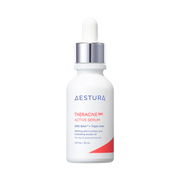
AESTURA Theracne 365 Active Serum
A leave-on serum format in the acne collection. Compare the full ingredient list and directions with any other active steps you use. Its presence here does not make it a hormone treatment.
View official PDP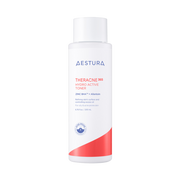
AESTURA Theracne 365 Hydro Active Toner
A toner format to compare when deciding whether another step is useful. Check the label for use instructions and consider whether an added layer improves your routine comfort.
View official PDP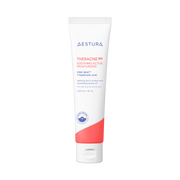
AESTURA Theracne 365 Soothing Active Moisturizer
A moisturizer format from the collection. Compare its texture and official directions with the other leave-on steps you already use; routine fit is individual.
View official PDP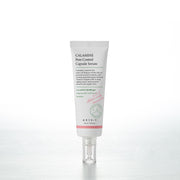
AXIS-Y Calamine Pore Control Capsule Serum
A serum option whose name references pore care. Treat that as a shopping descriptor, not evidence that it can diagnose or correct hormonal acne.
View official PDP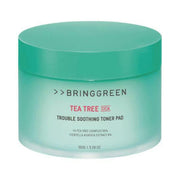
BRINGGREEN Tea Tree Cica Trouble Soothing Toner Pad
A pre-soaked pad format. Check its directions and active ingredients before adding it to another exfoliating step; a pad cannot address an endocrine cause.
View official PDP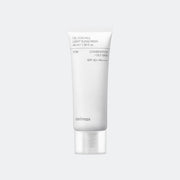
celimax Oil Control Light Sunscreen SPF50+ PA++++
A labeled sunscreen option. Follow its official directions and choose a finish you are willing to wear; sun care is routine support, not an acne or hormone treatment.
View official PDP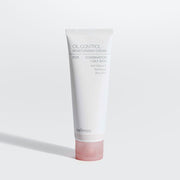
celimax Oil Control Moisturizing Cream
A cream texture to compare with lighter lotions or gels. Product naming is not a promise that oil production or breakouts will change for every user.
View official PDP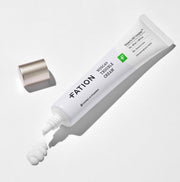
FATION Nosca9 Trouble Cream
A cream format listed for breakout-prone routines. Review the official directions and ingredient details; do not treat "trouble" in a product name as a medical claim.
View official PDP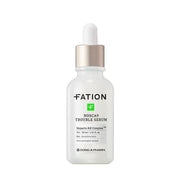
FATION Nosca9 Trouble Serum
A serum format to compare with a cream or toner pad. Avoid layering several products with overlapping actives without checking each label.
View official PDP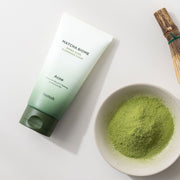
heimish Matcha Biome Amino Acne Cleansing Foam
A rinse-off cleanser. The site describes its label and format; read the complete directions and consider whether it leaves your skin comfortable after rinsing.
View official PDP| Moment | Routine question | Keep the claim in scope |
|---|---|---|
| Morning | Does cleansing feel comfortable, and can I apply sunscreen as directed? | Comfort and sun protection; not hormone balance. |
| Evening | Can I remove the day's sunscreen and makeup without scrubbing? | Clean skin surface; not a cure for acne. |
| When adding a product | What format is it, what does the label direct, and what else overlaps? | One formula at a time; no diagnosis from a reaction. |
| When symptoms persist | Would a clinician help identify acne, another condition, or a broader pattern? | Medical assessment belongs with a qualified professional. |

Track patterns without over-interpreting them
A short, consistent record can reduce the pressure to remember details during an appointment. Keep it factual and light. Write down when a flare begins, which areas are involved, whether lesions are tender or itchy, how long they last, and whether they leave marks or scars. If menstrual timing is relevant, you can record it privately. Add major changes in prescribed medicines, supplements, shaving, hair products, masks, helmets, or skin-care steps.
Do not turn tracking into constant inspection. You do not need a daily photo if that causes distress, and a photo cannot diagnose a hormone condition. A weekly note or a simple calendar mark may be enough. The purpose is to support a conversation and notice what matters to you, not to grade your skin or prove that a product worked.
Be cautious about interpreting cause from an uncontrolled experiment. Acne naturally fluctuates. If two products changed at once, if your cycle changed, or if a treatment was started or stopped, the result is hard to attribute. A clinician can help decide whether a pattern is meaningful and what kind of evaluation is appropriate. Avoid stopping prescribed medicine to create a cleaner experiment.
What timing and change can-and cannot-tell you
A flare may become visible after the underlying process has been developing for a while, and lesions do not all settle at the same pace. One change in acne after a new cosmetic product, a stressful week, or a medication change cannot isolate hormones as the cause. Several factors can overlap, and ordinary variation can resemble a pattern.
Repeated, dated observations may help describe when acne tends to recur and whether the timing is consistent. That record is context for a conversation, not a diagnostic test. Improvement after a product change does not prove that hormone activity was corrected; worsening does not establish a hormonal disorder. Do not stop or adjust a prescribed medicine based on a skin observation; discuss medication questions with the prescriber.
When to seek care-and what to bring
Consider a dermatologist or another qualified clinician when acne is deep or painful, leaves scars, keeps returning despite a reasonable routine, or affects your confidence and daily life. Ask sooner if you notice a substantial change alongside irregular or absent menstrual periods, new coarse hair growth, scalp hair thinning, or another symptom that concerns you. These signs have several possible causes. This list is not a diagnostic checklist, and it does not mean the reader has a hormonal disorder.
If you are pregnant, trying to conceive, breastfeeding, taking hormone therapy, or using prescription acne medication, tell the clinician before discussing products or medicines. Some treatments have important restrictions. The safer approach is to coordinate with the relevant prescriber rather than starting or stopping something based on beauty content.
Bring a list of current products, medicines, and supplements if convenient. Include when acne began, what has changed, previous treatments, whether lesions hurt or scar, and what you most want help with. If cycle timing is part of your experience, a few factual notes may help. You do not need to arrive with a laboratory panel, a specific diagnosis, or a perfect timeline.
A useful visit can end with a practical plan: what condition the clinician thinks is present, what options fit your health history, how to use them, what side effects to watch for, and when to follow up. If you still feel uncertain, ask which part of the plan addresses acne directly and which part, if any, addresses a separate hormonal concern.
Common claims that deserve a second look
"Jawline acne always means hormones."
No. A lower-face pattern can be one observation, but location does not measure hormone levels or identify an individual cause. Friction, shaving, products, ordinary acne variation, and other conditions can affect the same area.
"If acne appears before a period, I have PCOS."
No. A recurring cycle-related flare can be worth mentioning, but acne is not enough to diagnose PCOS. The WHO describes diagnosis as a clinician's assessment of a combination of features after other causes are excluded.
"Hormonal acne only affects women."
No. Hormone activity is part of skin biology in people of all sexes. Research labels often reflect the populations studied and should not be used to exclude others from care.
"A balancing serum can correct hormones."
That is not an appropriate cosmetic promise. A topical product should not be represented as treating an endocrine condition unless the claim is specifically authorized and supported for that product. The products in this guide are included as routine formats, not hormone treatment.
"Oily skin proves androgen excess."
No. Oiliness varies and can exist without a diagnosed hormonal disorder. Skin feel cannot replace clinical assessment or laboratory interpretation.
"A harsh cleanse will remove the cause."
No. Cleansing removes surface residue; it does not reverse hormone signaling. Over-cleansing can make skin feel more irritated and make it harder to understand what is happening.
"A product reaction proves a product is purging acne."
No. Irritation and allergy are possible, and a reaction is not evidence that a formula is working. Stop and seek appropriate help for a significant reaction.
"If a routine does not work, I did not try hard enough."
No. Acne has multiple influences, and cosmetic routines have limits. Severe or persistent acne may need medical care. Blame is not a treatment plan.
Related reading from ProtoClinical
- What Causes Acne? Pores, Hormones, Inflammation, and Everyday Triggers
- What Causes Body Acne? Triggers, Patterns, and When to Seek Care
- Period Skincare Routine: What to Adjust When Your Skin Changes
- Skincare Routine: Step-by-Step Order and How to Build Yours
- Breakouts vs Acne: How to Build a K-Beauty Routine
- Korean Skincare Routine for Acne-Prone Skin
- Closed Comedones and Korean Skincare
- Tea Tree vs Centella Asiatica: Acne Evidence or Barrier Support?
- Niacinamide for Oily-Looking Skin
- Non-Comedogenic Korean Skincare: What the Claim Can and Cannot Tell You
These links cover causes, routine structure, acne-like concerns, and how to read cosmetic claims. Each has a narrower purpose than diagnosing a hormone condition. Internal links are for further reading, not a substitute for a clinician.
Key points to keep
- "Hormonal acne" is a practical shorthand for a suspected hormone influence or recurring pattern; it is not, by itself, a diagnosis.
- Hormones can affect oil glands and acne biology, but acne involves more than one process.
- A jawline location, oily skin, or one cycle-related flare cannot identify a hormone disorder.
- Acne plus other symptoms may justify a medical conversation; a clinician decides whether evaluation is needed.
- Cosmetic routines can support cleansing, moisture, and sun protection. They do not treat PCOS or balance hormones.
- Persistent, painful, scarring, or distressing acne deserves care whether or not its cause is known.
Frequently asked questions
Is hormonal acne a medical diagnosis?
The phrase is usually used informally to describe acne that seems related to hormone activity or timing. It does not, on its own, diagnose a hormone disorder or identify a laboratory result. A clinician evaluates acne and other symptoms together.
Does acne on my chin or jawline mean my hormones are imbalanced?
No. Location can be part of your history, but it cannot diagnose an imbalance. Recurrence, lesion type, medicines, other symptoms, and examination findings provide more context.
Can hormonal acne happen if hormone tests are normal?
Skin may be responsive to hormone signaling even when measured values are not outside a laboratory reference range. Only a clinician can interpret whether testing is useful for a particular person. This article does not interpret individual results.
Does hormonal acne mean I have PCOS?
No. Acne can occur with PCOS, but acne alone does not establish PCOS. The WHO describes diagnosis as a combination of clinical features and exclusion of other causes. If acne occurs with persistent menstrual irregularity, new excess hair growth, or scalp hair thinning, consider discussing the whole pattern with a clinician.
Can men or nonbinary people experience hormone-influenced acne?
Yes. Hormone activity can affect skin in people of different sexes and gender identities. Research terms such as "adult female acne" describe a study population, not the full range of people who may experience acne.
Can a skincare product treat hormonal acne?
Cosmetic products can support routine steps such as cleansing, moisturizing, or sun protection, but they should not be presented as correcting hormone levels or treating an endocrine condition. Ask a clinician about persistent or significant acne.
Should I request hormone testing for acne?
Testing is not automatically required for every person with acne. A clinician can decide based on acne history, examination, and other symptoms. Ask what question a proposed test would answer instead of ordering a panel from an online checklist.
Can cycle-related breakouts be real even if they do not indicate PCOS?
Yes. A recurring change in acne around a menstrual cycle can be a real pattern without proving PCOS or another disorder. Record it if useful and mention it at an appointment, especially if other symptoms are present.
When should I see a dermatologist?
Consider care for deep, painful, persistent, scarring, or distressing acne, or when a new skin problem does not behave like your usual acne. A dermatologist can assess the skin and discuss suitable options for your health history.
What is the simplest helpful next step?
Describe the pattern you actually observe, keep routine changes manageable, and seek medical advice when acne is severe, persistent, painful, scarring, or accompanied by other symptoms that concern you. You do not need to diagnose the cause first.
Medical sources and scope
This educational article uses the following sources for its medical framing. Recommendations and treatment decisions depend on the individual; this text is not a diagnosis or a personal care plan.
- American Academy of Dermatology: Acne-Who gets and causes (hormones are one possible part of acne development; acne can occur beyond adolescence).
- American Academy of Dermatology: Stubborn acne? Hormonal therapy may help (clinician-prescribed options and patient-specific safety considerations).
- World Health Organization: Polycystic ovary syndrome (variable symptoms and diagnostic framework; acne is one possible feature, not a stand-alone diagnosis).
- Tan AU, Schlosser BJ, Paller AS. A review of diagnosis and treatment of acne in adult female patients. International Journal of Women's Dermatology. 2017. (review of multifactorial acne biology, clinical patterns, and evaluation limits; its population scope is adult female patients).
Product cards link to public ProtoClinical product pages. Their appearance here reflects a routine-format comparison, not clinical endorsement or proof of treatment benefit. Check the live label, full product details, and directions before purchase or use.
0 comments