
Who Gets Wrinkles? Age, Skin Tone, and Other Risk Factors
Anyone can develop wrinkles. Learn how age, skin tone, sun exposure, facial movement, smoking, and individual biology influence when lines appear, and what skin care can realistically change.
Anyone can develop wrinkles, regardless of skin tone, sex, or skin type. If you ask “How do you get wrinkles?”, the answer involves gradual changes in skin and facial support shaped by age, inherited biology, cumulative ultraviolet exposure, repeated facial movement, and smoking. These influences shift likelihoods across populations, but they cannot predict one person's face.
If your question is “How do you get rid of wrinkles?”, first separate preventing avoidable UV exposure from changing an established line. Some routines can support skin or soften the appearance of dryness, but no cosmetic product can promise to erase every wrinkle. “Who gets wrinkles?” is first a question about normal human variation: a fine line does not prove that someone is old, unhealthy, or using the wrong routine. It also does not tell you which product to buy. A useful explanation separates the people who can develop lines from the factors that influence their timing, then explains what a cosmetic routine can and cannot affect.
The quick answer: anyone can develop visible lines
Nearly everyone develops some visible lines as skin and facial structures change over time. Some lines appear mainly when a person smiles, squints, or raises the brows. Others remain noticeable when the face is relaxed. The timing, depth, location, and contrast of those lines vary. Two people of the same age can have very different patterns, while one person can see changes in different areas at different times.
Wrinkles are not restricted to older adults. Repeated facial movement can leave temporary folds that are visible during expression well before a person notices a persistent line at rest. Sun exposure can contribute to earlier photoaging. Dryness can make a fine surface line look more obvious for a while. Those observations do not mean that every crease in a younger person is permanent, or that every new line has the same cause.
Age raises the chance of seeing persistent lines because skin gradually changes, but age is a poor personal forecast. Family traits, lifetime sun exposure, smoking history, facial anatomy, and daily environment all vary. A population average cannot tell a reader when their first wrinkle will appear.

Age changes skin gradually, not on a fixed schedule
The natural aging process affects everyone, though not in the same order or at the same pace. Over time, skin can become thinner and drier, and its supporting structures change. The National Institute on Aging describes age-related changes in collagen and elastic fibers as contributors to wrinkles and skin fragility. This is a gradual process, not a switch that flips on at a particular age.

The American Academy of Dermatology separates intrinsic aging, which is strongly influenced by inherited biology, from extrinsic aging related to environmental and lifestyle exposures. It notes that genes influence when some changes appear. That is a useful explanation for family resemblance, but a family pattern is not a guarantee. Siblings can share traits and still differ in sun exposure, tobacco use, work conditions, medication history, and habits that affect the skin's appearance.
Age labels can also hide more than they explain. A person in their twenties may notice expression lines, post-sun changes, or temporary creases after a dry night. Someone in their seventies may have relatively few facial lines in one area and deeper lines in another. “Mature skin” is a broad retail phrase, not a diagnosis or a precise description of oiliness, sensitivity, hydration, or wrinkle depth.
Hormone changes, health conditions, and medicines can change how skin feels or behaves during a person’s life. Their relationship to a particular line is not always straightforward. Do not infer a hormone problem from facial wrinkles alone, and do not stop a prescribed medicine because of a cosmetic change. If a new skin change begins after a medicine or health change, the prescriber or dermatologist can help assess the timing and alternatives.
Skin tone influences patterns, but it does not create immunity
People with lighter, medium, and darker skin tones can all develop wrinkles. Melanin affects how skin responds to ultraviolet radiation, and group-level studies have reported differences in the appearance and timing of some aging signs. That broad pattern should not be simplified into “dark skin does not wrinkle” or “light skin always wrinkles first.” Both statements turn population findings into promises about individuals.
A 2016 review of skin aging across populations describes wrinkles, uneven pigmentation, and changes in elasticity or volume across skin types, while discussing differences in skin structure and aging patterns. A separate 2019 facial-imaging study compared Black women in Mauritius with white women in France. In that sample, the groups differed on measured facial-aging signs, with exceptions for some measurements. The study helps show that patterns can vary; its two specific populations cannot represent every person in either group or establish a universal ranking.
Research categories such as “ethnic skin,” “Black,” or “Caucasian” cover large and diverse populations. They can combine different ancestries, environments, sun histories, ages, and cultural practices. A study result can be useful for understanding a possible population pattern while remaining weak evidence for predicting an individual. Skin tone, ancestry, and race are not interchangeable variables.
Color is also only one way a wrinkle becomes visible. Contrast, lighting, skin texture, facial movement, and where a line sits can affect what a person notices. In some people, uneven tone or pigment changes may be more prominent than a crease. In others, movement lines or folds may be their first visible change. These differences are not evidence that one face is aging “better.”
The practical answer is simple: every skin tone benefits from sensible sun protection, and no one should assume that melanin makes tanning safe. The AAD recommends sun protection for all skin tones because ultraviolet exposure can cause skin damage even when a sunburn is not obvious. Protection reduces avoidable UV exposure; it does not stop natural aging.

Ultraviolet exposure can make lines appear earlier
Repeated exposure to ultraviolet light contributes to photoaging. The AAD explains that unprotected outdoor exposure and indoor tanning can lead over time to wrinkles, age spots, loose skin, and uneven complexion. Cumulative exposure matters. A person does not need to have had a dramatic sunburn for repeated exposure to be relevant.

Outdoor workers, athletes, gardeners, drivers, and people who spend long hours near windows may accumulate different exposure patterns from people whose daily lives keep them indoors. Travel, outdoor recreation, reflective surfaces, altitude, latitude, season, clothing, shade, and sunscreen use also change exposure. These are not fixed identities. They are circumstances that can change across a person’s life.
Indoor tanning is a distinct avoidable exposure. The AAD warns that tanning beds emit harmful ultraviolet radiation and can speed visible skin aging. A tan is the skin’s response to UV exposure, not a sign that the exposure was harmless. Self-tanning products can change appearance without intentional UV tanning, although they do not provide sun protection unless a sunscreen label separately says so.
Sun exposure can also matter differently across skin tones. A person may experience UV damage as pigment changes, texture shifts, or wrinkles, and may not notice a classic red burn. Lack of visible redness is not proof that exposure caused no damage. For general protection, the AAD advises shade, sun-protective clothing, and broad-spectrum sunscreen with SPF 30 or higher. Follow the sunscreen’s own directions and reapply as directed, especially after swimming or sweating.
If you shop for sunscreen in the United States, check the product’s actual package rather than relying on a retailer listing alone. The U.S. Food and Drug Administration explains that sunscreens are regulated as nonprescription drugs in the United States, while other countries may regulate them differently. If you want coverage against both UVA and UVB, look for “Broad Spectrum” on the U.S. label; the FDA says SPF primarily indicates UVB protection. Follow the package’s Drug Facts directions. An online SPF/PA listing does not show you what the U.S. package says. FDA sunscreen guidance explains these label distinctions. The skin-aging question is not a reason to trade clear instructions for an attractive texture.
Facial movement is normal and can leave expression lines
Smiling, frowning, speaking, squinting, and raising the brows fold skin over moving facial muscles. Lines that are strongest during an expression are often called dynamic lines. With repeated movement over many years, some folds may become visible while the face is relaxed. Individual anatomy and skin support help determine where these lines appear.
Facial movement is part of ordinary communication. A line around the eyes does not mean a person should stop smiling, and expressions do not reveal a person’s character or health. The AAD mentions repeated expressions as one contributor to premature-looking lines, including squinting. Sunglasses that reduce glare may make outdoor vision more comfortable; that is a practical step, not a promise to prevent every line around the eyes.
Expression lines also differ from dehydration lines and structural folds. A crease that looks more noticeable when skin feels tight may soften when the surface is comfortable, but that does not necessarily remove an established wrinkle. A fold that remains in similar light while the face is relaxed has a different visual pattern from a line that appears only during one expression. These observations describe appearance; they do not diagnose the cause.

Smoking and other exposures can influence skin appearance
Smoking is associated with faster visible skin aging. The AAD lists smoking as a contributor to wrinkles and a dull or sallow complexion. Exposure to tobacco smoke can be relevant even when a person’s skin routine is otherwise elaborate. Quitting can benefit overall health, and it may improve some aspects of skin appearance, but it cannot guarantee that existing wrinkles will disappear.

Environmental exposures are not evenly distributed. Some people work outdoors or around dust, heat, cold, wind, or repeated irritants. Others have access to shade, protective clothing, and regular skin care. This can influence comfort and cumulative exposure without meaning that any one job or climate inevitably produces wrinkles. Protective equipment, workplace guidance, and basic skin comfort matter more than blame.
Sleep, stress, diet, and hydration are often promoted as direct wrinkle controls. Those topics are complex, and a lifestyle headline does not establish that one night of poor sleep or one meal caused a visible line. Adequate hydration and sleep support general well-being, but drinking extra water is not a proven way to erase a permanent fold. A balanced diet can support health; it is not a substitute for protection from UV exposure or evaluation of a concerning skin change.
Dryness can exaggerate a line without explaining its origin
When the outer skin feels dry, fine surface lines can look sharper. A moisturizer can trap water and make some fine lines appear less noticeable, according to the AAD. This is a temporary cosmetic effect. It does not mean that dry skin alone caused every wrinkle, or that a richer cream can reverse structural changes.
Dry, oily, combination, and sensitive describe different aspects of skin behavior. Someone can have an oily forehead and dry cheeks, or comfortable skin that becomes tight in winter. None of those labels tells you exactly how many wrinkles a person will have. A routine should match the person’s current comfort and product tolerance, not a fixed age category.
If a product burns or stings persistently, adding more products to “repair” the sensation may make the routine harder to understand. The AAD advises stopping irritating skin care products, while noting that some prescribed treatments can sting and should be discussed with the treating dermatologist. A reader using prescription medicine should follow the clinician’s instructions rather than self-adjusting from an online article.

What does not tell you who will get wrinkles
No single visible clue predicts an individual’s wrinkle pattern. Age, skin tone, family resemblance, facial movement, dryness, and a person’s routine each provide incomplete information. A photo under hard light, a magnifying mirror, or a filter can exaggerate a line. A smooth photo cannot establish that a person has no skin aging or that a particular product caused the appearance.

Skin type does not determine wrinkle timing. Oily skin can still develop lines; dry skin does not guarantee early wrinkles. Acne history, pore size, pigmentation, and facial hair are separate characteristics. People often see several changes together, but one does not prove the cause of another.
Gender is not a reliable personal forecast either. Hormones, facial anatomy, shaving, grooming, and social patterns of sun exposure may vary among individuals and populations. Those influences do not support rules such as “men do not need skin care” or “women wrinkle at one age.” Practical advice should follow the person’s exposure, comfort, goals, and health context.
Most wrinkles are a normal cosmetic change. They do not mean the skin is dirty or damaged by poor discipline. The more important distinction is between gradual lines and a separate lesion or rash. A persistent rough or scaly spot, a sore that does not heal, or a spot that changes in size, shape, or color should be assessed as a skin change, not automatically filed under “wrinkles.” The AAD notes that actinic keratoses can arise in sun-damaged skin and can be precancerous.
How to observe a change without diagnosing it from a mirror
If a particular line concerns you, compare like with like. Look at the area in ordinary indirect daylight, first with your face relaxed and then during the expression that brings the line out. Avoid judging only from a magnifying mirror or a phone image taken at a different distance. Strong overhead lighting, camera sharpening, makeup, and facial tension can all change how prominent a crease appears.
A short note can be more useful than a daily close-up. Record whether the line is present at rest, whether the skin also feels tight or flaky, and whether the change followed a new product, a season, more outdoor time, or another change in routine. This observation cannot identify the cause, but it can help you describe the concern to a dermatologist. If the visible change is actually a rough spot, persistent redness, a sore, or a mark that is changing, describe that feature directly rather than assuming it is ordinary aging.

What can someone do if lines bother them?
Start by deciding what bothers you: a line during expression, a fine surface line when skin feels dry, a deeper fold at rest, uneven tone, or a different texture. Naming the visible concern helps avoid buying a product for a different problem. It also makes a dermatology appointment more useful if you want treatment options.

Sun protection is a practical step for reducing additional UV-related damage. The AAD recommends seeking shade, covering exposed skin with protective clothing, and using a broad-spectrum SPF 30 or higher sunscreen according to directions. Avoiding indoor tanning reduces a preventable UV source. These steps cannot change inherited traits or stop normal movement and aging, and they should not be sold as a guarantee that wrinkles will not occur.
Moisturizer may soften the look of some fine surface lines by improving hydration. A topical retinoid may be an option for some people who want to address photoaging, but retinoids differ in strength and evidence, and irritation is possible. A cosmetic product is not interchangeable with prescription treatment. Ask a dermatologist about risks and realistic options if you have persistent irritation, a skin condition, pregnancy-related questions, or a prescription routine.
Product shopping should be an optional decision after the question has been answered. A serum, cream, or peptide label cannot tell you who is susceptible to wrinkles. A product name that says “firming,” “lifting,” or “anti-aging” is not clinical proof. Compare the full ingredient list, directions, intended area, and package instructions. Do not introduce several active products at the same time; if you do, a reaction becomes harder to interpret.
ProtoClinical’s Wrinkles collection, Loss of Firmness collection, Retinol and Vitamin A collection, Peptides collection, and Sunscreen collection are catalog filters. They can help compare formats and product labels, but a collection placement does not demonstrate that every item prevents or treats wrinkles.
Examples to compare by format and label
These official catalog examples illustrate different product formats and label language. Their presence here is not evidence that a product prevents or removes wrinkles. Check the current product page, full ingredient list, directions, intended area, and package before deciding whether an item fits your routine.

Dr.Althea 0.1 Gentle Retinol Serum 30ml
Official product page lists 0.1% retinol with bakuchiol, panthenol, birch sap, and soybean oil.
View product details
SKIN1004 Hyalu-Teca Firming Cream 50ml
A 50 ml cream; the official page lists Hyalu-Teca, peptides, ceramide, and panthenol.
View product details
WELLAGE Hyper Peptide Bandage Cream 1000 50ml
Peptide cream, 50 ml, as named and sized on the official product page.
View product details
belif Super Drops Peptide Firming Serum 30ml
Peptide firming serum, 30 ml, as named and sized on the official product page.
View product details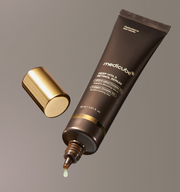
MEDICUBE Deep Vita A Retinol Serum 30ml
Retinol serum, 30 ml, as named on the official product page.
View product details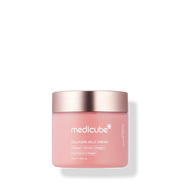
Medicube Collagen Jelly Cream 50ml
Collagen-labelled jelly cream, 50 ml, as named on the official product page.
View product details
numbuzin No.2 Rose PDRN Collagen 2X Plumping Serum 30ml
Rose PDRN and collagen are part of the 30 ml serum's official product name.
View product details
Hanskin Vitamin A Glow Retinol Serum 30ml
Retinol serum, 30 ml, as named on the official product page.
View product details
Hanskin Vitamin A Glow Retinol Cream 50ml
Retinol cream, 50 ml, as named on the official product page.
View product details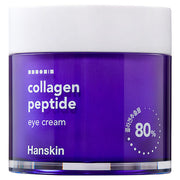
Hanskin Collagen Peptide Eye Cream 80ml
Collagen peptide eye cream, 80 ml, as named on the official product page.
View product detailsFrequently asked questions
Who gets wrinkles first?
There is no reliable age or order that applies to everyone. Genetics, lifetime UV exposure, facial movement, smoking, anatomy, and individual skin changes all contribute. Population-level findings do not predict an individual’s first persistent line.
Can a young person have wrinkles?
Yes. Expression lines can appear with movement at many ages, and UV exposure can contribute to photoaging earlier than expected. Fine lines may also look sharper when skin is dry. One visible crease does not by itself show whether a line is temporary, persistent, or caused by one factor.
Does darker skin get wrinkles?
Yes. People with darker skin tones can develop wrinkles and other signs of aging. Melanin affects UV response, and studies report differences in some aging patterns across groups, but no skin tone prevents wrinkles. Use sun protection even when sunburn is not obvious.
Are wrinkles genetic?
Genes influence aspects of intrinsic aging and when some changes appear. They are one part of the picture. Sun exposure, smoking, facial movement, and other lived conditions can also shape appearance, so a family resemblance is not a complete prediction.
Does dry skin cause wrinkles?
Dryness can make fine surface lines appear more noticeable because the skin looks or feels less comfortable. Moisturizer may soften their appearance temporarily. Dryness alone does not explain every persistent fold or establish the cause of a line.
Can sunscreen prevent wrinkles completely?
No. Sun protection can reduce additional UV damage and lower the contribution of photoaging. It cannot stop intrinsic aging, facial movement, or every factor that affects skin. Shade, clothing, and sunscreen work together; a sunscreen label does not make intentional tanning safe.
How do you get rid of wrinkles?
Some products can change the appearance of fine lines or support a routine that protects against additional sun damage. Results depend on the ingredient, finished formula, use, and individual response. No cosmetic product should be promised to erase every wrinkle, including lines associated with older age. A dermatologist can explain medical and cosmetic options with their benefits and limits.
Evidence and references
- American Academy of Dermatology: 11 ways to reduce premature skin aging
- American Academy of Dermatology: How dermatologists treat sun-damaged skin
- American Academy of Dermatology: Sun protection
- National Institute on Aging: Skin care and aging
- Vashi, de Castro Maymone, and Kundu: Aging Differences in Ethnic Skin
- Campiche et al.: Appearance of aging signs in differently pigmented facial skin
- U.S. Food and Drug Administration: Sunscreen: How to Help Protect Your Skin from the Sun
This article summarizes general educational sources and does not diagnose a reader. The skin-tone studies describe specific groups and cannot predict an individual result. Seek a qualified clinician for a persistent, painful, changing, or otherwise concerning skin lesion.
Sources describe population patterns and general care guidance. They cannot forecast an individual person's wrinkle timing or replace clinical assessment.
0 comments