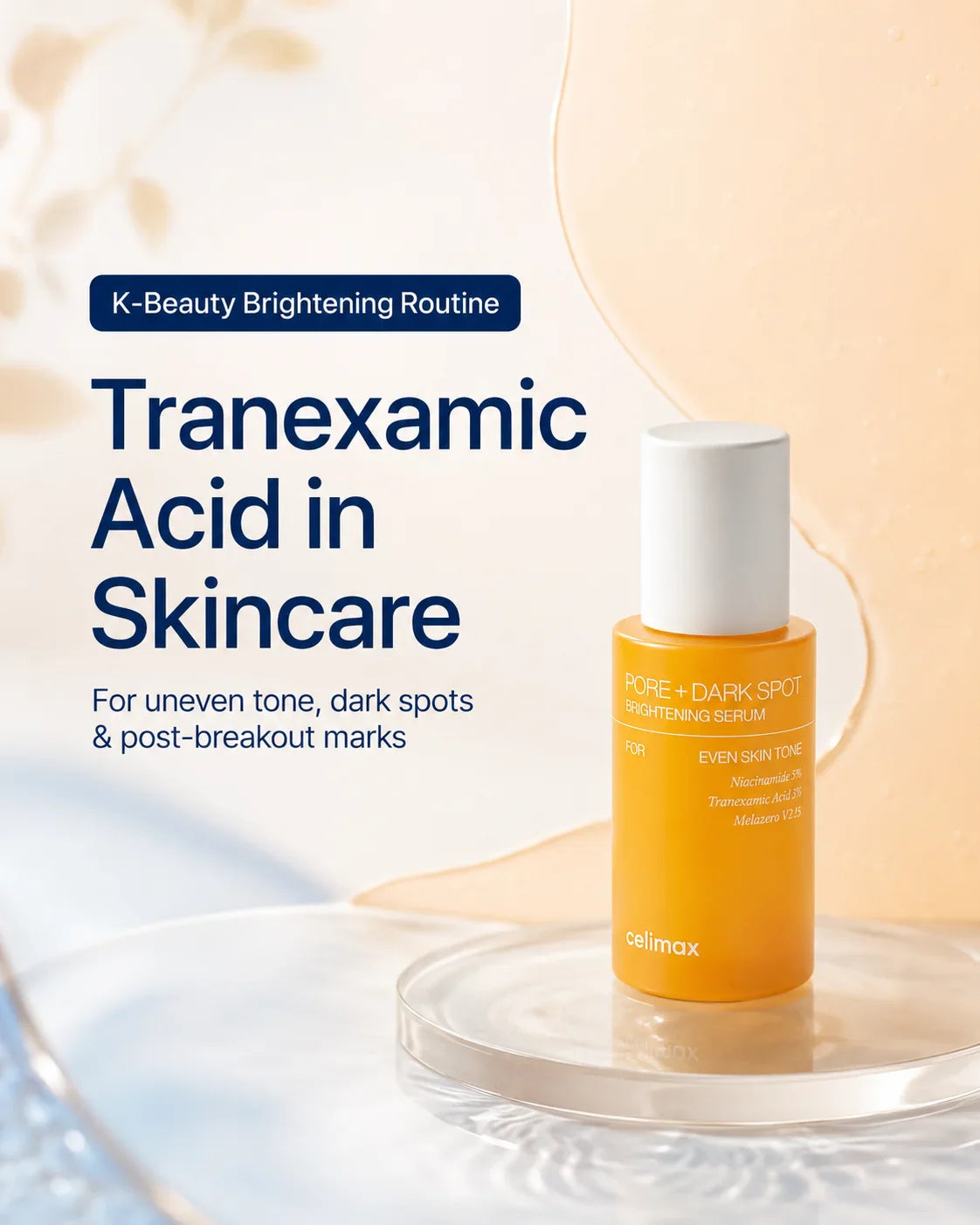
Tranexamic Acid in Skincare: What to Know Before You Try It
A practical guide to where tranexamic acid fits in a brightening routine, who may like it most, and how to use it without making your skincare feel complicated.
Tranexamic acid often comes up when people start looking for help with dark spots, post-breakout marks, or uneven tone. The name sounds clinical, but in skincare, it is usually used as a steady tone-supporting ingredient rather than a dramatic overnight fix.
The key is to build a routine around it properly. Tranexamic acid works best when the rest of the routine is consistent, hydrating, and protected with sunscreen during the day. Think of it as part of a long-term brightening plan, not a shortcut.
Quick Answer
Tranexamic acid is a good option when your routine is focused on uneven tone, lingering post-breakout marks, or dark spots. It works best with consistent use, supportive hydration, and daily sunscreen to help protect the progress you are trying to make.
Who This Is For
Tranexamic acid is usually best for people who want a tone-focused routine that does not feel harsh or overloaded. It can be especially useful when the main concern is leftover marks after breakouts, sun-related discoloration, or a patchy-looking complexion.
Routines focused on dark spots, uneven tone, or post-acne marks that need a steady brightening step.
Niacinamide, hydrating layers, barrier-friendly moisturizers, and daily sunscreen all pair well with tranexamic acid.
Expect gradual improvement in the look of tone and marks. This is not an instant-correction ingredient.
What Tranexamic Acid Actually Does in a Routine
In skincare, tranexamic acid is mainly used as a tone-evening support ingredient. It belongs in routines that are trying to make stubborn marks look less noticeable and help the complexion appear more even over time.
It is not a replacement for cleansing, moisturizing, or sunscreen. It also does not work well inside a messy routine where products are constantly changing. The more consistent the routine, the easier it is to understand what the ingredient is doing for your skin.
You will often see tranexamic acid paired with niacinamide, vitamin C derivatives, brightening complexes, or hydrating ingredients. That makes sense because most people working on uneven tone still want their skin to feel comfortable, smooth, and easy to care for every day.
If dullness is your main concern, vitamin C may still be worth considering. If active breakouts or clogged pores are the bigger issue, a pore-focused routine may come first. But if leftover marks are taking longer to fade than you would like, tranexamic acid is a useful ingredient to have on your radar.
How to Layer Tranexamic Acid Without Overcomplicating It
Keep the placement simple. Tranexamic acid usually fits after cleansing and before heavier creams or sunscreen. That gives the treatment step a clear role while still leaving room for moisture and protection.
Start light
Cleanse gently, apply your tranexamic-acid serum or treatment, then follow with moisturizer if your skin needs it.
Finish with sunscreen
Sunscreen is part of the brightening routine. Without it, dark spots and uneven tone are harder to manage.
Add comfort back in
At night, pair the ingredient with a moisturizer or nourishing cream so your skin still feels comfortable.
Do not rush to add more
Give the routine time before switching products or stacking too many brightening actives at once.
Shop the Routine
These picks help build a complete routine around tranexamic acid: a cleanser, two tone-focused serums, a soft finishing cream, and a sunscreen to protect the daytime side of the routine.

Dr.Melaxin
TX Ampoule Cleanser 100ml
Best for: a cleanser that resets the skin before brightening steps without making the routine feel stripped.
Use it: as your first step to remove daily buildup before serum, moisturizer, and sunscreen.
$17.29

celimax
Pore+ Dark Spot Brightening Serum 30ml
Best for: a lightweight serum step focused on uneven tone and dark-spot care.
Use it: after cleansing when you want tranexamic acid and niacinamide to lead the routine.
$22.27

medicube
TXA Niacinamide 15% Serum 30ml
Best for: a more concentrated brightening serum when uneven tone is the main concern.
Use it: as the main treatment layer in a focused dark-spot routine.
$31.59

celimax
Pore+ Dark Spot Brightening Cream 35ml
Best for: sealing brightening steps with a softer, more comfortable finish.
Use it: after serum, especially in the evening or whenever your skin needs more cushion.
$19.65

celimax
Pore+ Dark Spot Brightening Care Sunscreen SPF50+ PA++++ 50ml
Best for: protecting a tone-focused routine with a lightweight daytime finish.
Use it: every morning as the last step, especially when dark spots or post-breakout marks are part of your concern.
$15.96
Common Mistakes
The first mistake is expecting tranexamic acid to carry the whole routine by itself. If uneven tone is the concern, the full routine still matters: cleanse well, use the treatment consistently, moisturize, and wear sunscreen during the day.
Another common issue is adding too many brightening actives at the same time. A crowded routine can make the skin harder to read and easier to irritate. Choose one clear treatment step, support it with moisture and sunscreen, then give it time.
The biggest mistake is skipping sunscreen. When the goal is to improve the look of dark spots or post-breakout marks, daily UV protection is not optional. It is part of the same plan.
FAQ
Can I use tranexamic acid every day?
Some routines are built for daily use, but it depends on the formula and how your skin responds. Start with the product directions and adjust if your skin feels uncomfortable.
Does tranexamic acid replace vitamin C?
Not always. Vitamin C is often used for glow and antioxidant support, while tranexamic acid is more commonly used in tone-focused routines. Some people use one; others use both.
Do I still need sunscreen if I only use it at night?
Yes. If your routine is focused on dark spots or post-breakout marks, sunscreen during the day helps protect the progress you are trying to build.
Build a Brighter Routine That Still Feels Calm
Tranexamic acid makes the most sense when the routine around it is simple, steady, and easy to repeat. Choose a focused brightening path, support it with moisture, and protect your skin with sunscreen every morning.
0 comments