
Best Vitamin C Moisturizer: How to Choose a Formula That Fits
A format-first guide to vitamin C moisturizers
Searching for the best vitamin C moisturizer usually sounds like an ingredient contest: more vitamin C, a bigger percentage, or a cream that promises to brighten everything at once. A more useful comparison starts with the routine job. A moisturizer should make skin feel comfortable and help limit water loss. Vitamin C is a family of ingredients used for appearance-focused tone and antioxidant care. Some creams combine both jobs; many vitamin C products are serums or ampoules that go under a separate moisturizer.
The best vitamin C moisturizer for your routine is therefore the formula that gives you the amount of moisture you need, uses a form of vitamin C you are willing to use consistently, and fits alongside sunscreen and the rest of your products. A rich cream may be comfortable on dry cheeks and too much on an oily T-zone. A lightweight gel may sit well under sunscreen yet feel insufficient in a cold, dry room. A high-strength L-ascorbic acid serum may be the wrong format when your actual goal is a simple, low-fuss moisturizer step.
This guide explains the tradeoffs without treating one ingredient name as a guarantee. It separates direct face creams from adjacent vitamin C formats, shows what label details are useful, and gives a conservative way to test a new leave-on product. It cannot predict an individual reaction or diagnose what is causing a new dark mark, rash, or persistent irritation.
In this guide
- What “vitamin C moisturizer” can mean
- What a moisturizer contributes
- How vitamin C forms differ
- What concentration and pH can, and cannot, tell you
- How to choose by skin feel and routine
- How to use, layer, and patch test
- How to compare current ProtoClinical products by actual format
- When to ask a dermatologist
- Frequently asked questions

Start with the job
1. What does “vitamin C moisturizer” actually mean?
Retail language often compresses several different ideas into one phrase. A vitamin C moisturizer may be a traditional face cream with an ascorbic-acid derivative in its ingredient list. It may be a moisturizing gel-cream that also contains a vitamin C ingredient. It may be a regular moisturizer packaged with a vitamin C serum. Or it may be a sunscreen whose cream texture feels moisturizing. Those products do not occupy the same routine slot, and a page label does not make them interchangeable.
Keep two questions separate. First: what does the vehicle do? Creams and gel-creams can provide water, humectants, emollients, and film-forming ingredients in combinations that affect comfort and finish. Second: what does the vitamin C ingredient contribute? That depends on the molecule, the formula around it, how much is present, how the formula is packaged and stored, and what testing exists for the specific product. The words “vitamin C” on the front do not answer all of those questions.
If the product is a standalone serum or ampoule, it is not a moisturizer just because the liquid feels slightly hydrating. If a sunscreen is described as a “sun cream,” it remains a sunscreen step. And if a cream is sold with an LED or massage device, treat the device bundle as a separate convenience or use feature rather than evidence that the topical cream performs better.
For practical shopping, decide whether you specifically want one jar or tube to cover moisture plus vitamin C, or whether you are comfortable separating the jobs: one vitamin C treatment, one moisturizer, then daytime sunscreen. A combined product can simplify a routine, but a separate pair gives you more control over treatment strength and moisturizer richness. Neither arrangement is automatically more effective.
2. The moisturizer part still matters
The simplest mistake is to shop the active before considering the base. If skin regularly feels tight after washing, flakes around the nose, or becomes uncomfortable in dry weather, the formula’s moisture profile may matter more to daily use than whether its vitamin C percentage is prominently disclosed. If a heavy cream feels greasy within an hour, a concentrated ingredient list will not fix the mismatch in texture.
Moisturizers are complete mixtures. Humectants such as glycerin attract and hold water in the outermost layer. Emollients help soften rough-feeling areas and improve slip. Occlusive ingredients can reduce water escape by leaving a protective film. Many creams combine all three. A gel-cream may use a lighter oil phase or more water-binding ingredients; a rich cream may include more emollients, waxes, butters, silicones, or other film-forming materials. Labels can offer clues, but the whole formula and your own skin experience are what decide whether the texture feels right.
Vitamin C does not replace this moisturizer work. It is not a dry-skin rescue ingredient by itself, and it is not necessary for every person to have comfortable skin. If a formula contains a vitamin C derivative alongside glycerin, niacinamide, panthenol, ceramides, or emollients, those ingredients may contribute different roles. Do not credit all comfort, brightness, or smoothness to one headline ingredient without product-specific testing.
Some people find a separate vitamin C serum easier to keep in a lighter layer while choosing a cream solely for hydration. Others prefer a single cream because fewer bottles make a routine easier to maintain. There is no rule that an active must be delivered in serum form, nor a rule that every moisturizer should contain a brightening ingredient. The product has to fit the job and the user.
If you are building a basic routine, it is reasonable to begin with a gentle cleanser when needed, a moisturizer that feels comfortable, and daytime sunscreen. A vitamin C product is an optional treatment step, not a prerequisite. The ProtoClinical routine-order guide lays out where treatment, moisturizer, and sunscreen fit without requiring a long list of steps.

The base and the active
3. How vitamin C forms differ
“Vitamin C” is a family label. L-ascorbic acid, also called ascorbic acid, is the form most people mean when they talk about pure vitamin C skincare. Cosmetic formulas also use derivatives such as sodium ascorbyl phosphate, ascorbyl glucoside, 3-O-ethyl ascorbic acid, tetrahexyldecyl ascorbate, magnesium ascorbyl phosphate, and ascorbyl palmitate. The names point to different molecules; they should not be collapsed into one identical ingredient.
Why are derivatives used? Ascorbic acid can be difficult to keep stable in a water-containing formula. Modifying the molecule can change its solubility or improve stability in some tested systems. That does not automatically mean every derivative is more stable in every retail cream, penetrates the same way, or produces the same result. A small comparative study of solution and topical-formulation stability found that results differed between derivatives and the conditions tested; it cannot certify every current product. See the published stability study and keep the conclusion narrow.
The evidence also does not allow a simple ladder where pure vitamin C is always “stronger” or a derivative is always “gentler.” Skin response depends on concentration, pH, vehicle, contact, other ingredients, application frequency, and individual tolerance. Some people prefer derivatives for routine comfort, while others deliberately choose an L-ascorbic acid product because they want that specific form and accept its formulation demands. A product-specific trial is more informative than a claim that one derivative wins for every face.
Look for the exact ingredient name in the current full INCI when possible. If the page only says “vitamin C complex” or “vitamin blend,” the exact form and amount may not be clear. That uncertainty does not prove the formula is ineffective; it limits how confidently a shopper can compare it with a formula that discloses more. A brand may explain the function of a blend, but an attractive story is not the same thing as a controlled clinical test of the finished moisturizer.
4. Concentration, pH, and stability: useful clues with limits
People often search for the best vitamin C cream by percentage because a number feels concrete. Percentages can help when the form is clear and the brand explains what the number describes. They are less useful when the product uses several derivatives, when the number refers to a complex rather than pure vitamin C, or when there is no evidence that the exact finished product was tested at that concentration.
A frequently cited skin-penetration study by Pinnell and colleagues evaluated topical L-ascorbic acid on pig skin. In that experimental model, pH and concentration influenced absorption; the paper reported a pH threshold for L-ascorbic-acid penetration and a concentration above which more material did not further increase absorption. Those observations describe a laboratory/animal-skin penetration study, not a consumer trial comparing creams, not a universal recipe for shoppers, and not an outcome guarantee. A reader cannot infer the pH, penetration, or clinical performance of a store cream from the front-label percentage alone. Read the original absorption paper with that context.
pH matters most when interpreting formulas built around free L-ascorbic acid in a water-based vehicle. Many commercial pages do not disclose formula pH. Do not try to estimate it from a low ingredient-list position, a “tingle,” a citrus scent, or a claim that the product is “potent.” A derivative may have different formulation requirements. The specific finished formula is what matters, and a research result about one form should not be pasted onto another.
Stability is another formula-level question. Water, oxygen, heat, light, the solvent system, pH, chelators, antioxidant partners, package design, and manufacturing can all affect how a vitamin C ingredient behaves. An opaque air-limiting package may be a sensible design choice, but package appearance by itself does not prove stability. A dropper bottle is not automatically bad; a pump is not automatically ideal. Look for brand guidance on storage, a recognizable lot/date label, a clear full ingredient list, and directions that make sense for the finished product.
Color change is not a precise home assay. Vitamin C products can have an expected tint from other ingredients. A notable darkening, unusual odor, separation, damaged package, or a formula that looks different from its normal appearance may justify pausing and asking the manufacturer whether it is still usable. Do not recommend “use it anyway” when a product has changed substantially, and do not assume every amber formula is oxidized. If there is a manufacturer storage statement, follow that information instead of inventing a refrigerator requirement.

Evidence before percentages
5. What the evidence can tell you
Topical vitamin C has plausible cosmetic roles and a research history, but evidence for an ingredient is not equivalent to evidence for every product that contains it. A test of an ingredient in a laboratory, a study of a specific formulation, and a clinical trial of a finished product answer different questions. A moisturizer that lists a derivative has not thereby inherited every finding on L-ascorbic acid.
When reviewing a product claim, ask four questions. Was the exact finished formula studied? Was the study performed on people or only in a laboratory? What was measured: hydration, a visual rating, instrumental color, wrinkle appearance, or another endpoint? And how many participants completed the trial over what period? If a product page does not supply this information, describe only what its ingredient list and texture page actually disclose. Avoid promising a result or timeline.
Some studies combine vitamin C with vitamin E, ferulic acid, sunscreen, or other ingredients. Combination data can be interesting, but it cannot show that vitamin C alone caused the outcome. A study of a topical antioxidant solution is not proof that a separate moisturizer works the same way. A study conducted on sun-damaged skin may not predict results for post-acne marks or melasma. A study in one age group or skin tone may not predict response in another. These are reasons to calibrate the claim, not reasons to dismiss all cosmetic research.
For uneven tone, the useful expectation is gradual cosmetic appearance support, not erasure. Dark patches have different causes. Post-inflammatory marks after acne, sun-related lentigines, melasma, medication-related pigmentation, and a new changing spot should not all be self-managed as the same issue. Topical skin care may support appearance for some cosmetic concerns, but it cannot identify the cause. A persistent or new changing lesion deserves clinical assessment instead of a stronger cream experiment.
The right consumer-facing comparison is usually modest: What does the formula contain? What is the routine slot? What is disclosed versus unknown? Who may prefer the texture? What are the practical downsides? Those questions are more decision-useful than calling one product “the clinically strongest” without seeing a product-specific trial.
6. Pick a texture for your skin and climate
Skin type labels can help start a conversation, but they do not dictate a texture. A person can have an oily forehead and dry-feeling cheeks, or a comfortable routine in humid weather that feels inadequate during winter. Consider your skin today, the other leave-on products you use, the climate, and whether you will wear sunscreen or makeup over the cream.
When a light gel-cream may fit
A lightweight gel-cream may feel easier in warm, humid weather or when a richer cream tends to leave a film you dislike. If you layer a vitamin C serum underneath, a thin moisturizer can keep the total routine from feeling heavy. But “oil-free” or “gel” does not prove that a product cannot irritate or cause breakouts. Read the full ingredient list and test it on your own skin; avoid assuming that a light feel is appropriate for every oily or acne-prone user.
When a more cushioning cream may fit
A richer cream may be more comfortable when skin feels dry, tight, or rough, when the air is dry, or when a treatment routine leaves you wanting a more protective final layer. A richer texture can make a vitamin C routine feel easier to maintain if the active product itself is relatively light. If rich products feel occlusive or interfere with makeup, a smaller amount or a lighter moisturizer may be preferable. The finish is a preference, not a medical treatment.
When a separate serum and cream may make more sense
Choose separate products when you want to adjust the moisturizer independently from the active, when you already own a reliable cream, or when the best product for your desired vitamin C form is only offered as a serum. The additional bottle adds cost and another chance for irritation or pilling, so “separate” is not inherently superior. A simple routine that you consistently use is usually more useful than a complicated layering plan that you abandon.
Consider sensitivity and fragrance context
Sensitive skin is not one fixed condition. Stinging can happen with an active, fragrance, a disrupted barrier, over-cleansing, or an unrelated skin issue. Products containing fragrance or fragrant essential oils are not automatically harmful, but someone who knows these ingredients bother them should take that history seriously. Ingredient-list transparency helps shoppers make an informed choice; it cannot promise that a product will be tolerated.
For a reactive routine, the conservative approach is to reduce variables. Keep the cleanser and moisturizer familiar, introduce one new leave-on formula at a time, and avoid simultaneously adding vitamin C, a retinoid, and multiple exfoliating acids. The ceramides-versus-panthenol guide discusses how moisturizer ingredients can serve different roles without treating one label ingredient as a guarantee.

Selection matrix
7. Match the formula to a real preference
Use a short selection matrix rather than looking for a universal winner. The first column is the decision that matters; the middle column describes what to check; the last column describes the tradeoff. This makes it easier to compare products that are not identical without pretending they are.
| Decision | What to check | Practical tradeoff |
|---|---|---|
| Do you want one step or two? | Is the formula a true face cream, or a serum/ampoule with a moisturizing feel? | A combination step simplifies; a separate cream gives more control over moisture. |
| Which vitamin C molecule? | Look for an exact INCI name: L-ascorbic acid or a named derivative. | Evidence and formulation requirements differ; the label name alone is not a product trial. |
| What is disclosed? | Check if concentration is stated for the exact vitamin C form, not a multi-ingredient blend. | More disclosure makes comparisons easier; a missing percent is not proof of zero effect. |
| How much moisture? | Assess the base: humectants, emollients, and film-forming ingredients, plus how the texture wears. | Richer can cushion dry skin but feel heavy; a light gel may need a second moisturizer. |
| What is in the rest of the routine? | Retinoids, exfoliating acids, benzoyl peroxide, fragrance, and other actives can change tolerance. | Adding several new actives at once makes the cause of a reaction harder to identify. |
| What is the package? | Review brand storage guidance, light/air exposure, closure, and changes to the product. | Packaging can support stability but cannot guarantee it without formula evidence. |
| Will it work under sunscreen or makeup? | Notice pilling, shine, rubbing, and how many layers are already in the routine. | A product that feels good but never layers well may be used less often. |
Do not turn the matrix into a scoring contest. A product can be a good fit even if it discloses fewer numbers, provided your goal is simple moisture and you understand the uncertainty. Another formula can be a poor fit despite an impressive percentage if the finish is uncomfortable or it competes with your existing treatment plan. Your skin does not owe the product a role just because its marketing is persuasive.
8. “Best” depends on the task
People searching “best vitamin C moisturizer” may be trying to solve different problems. One shopper wants a lightweight face cream with a tone-support ingredient. Another wants a rich moisturizer because a vitamin C serum leaves the face tight. A third wants a formula that might support a more even-looking complexion. Someone else is trying to replace a sunscreen with a brightening cream. Those are not the same decision, so a list of one-size-fits-all winners can confuse rather than help.
If your main aim is comfortable moisture, compare moisturizers first and treat vitamin C as an optional feature. A simple barrier-supportive cream can still be the right choice without vitamin C. If your primary aim is an antioxidant treatment and you already have a moisturizer that works, a separate product may let you select the active form more intentionally. If your concern is a new or persistent pigment change, the first task is identifying the cause; do not infer it from a photo or attempt to treat it as ordinary dullness.
When the product’s exact vitamin C amount is unknown, do not compare it as “lower strength” or “weaker” unless the product gives a basis for that comparison. When the formula contains several vitamin C derivatives, an ingredient count does not equal a clinically effective dose. When a brand reports a percentage, check whether it names the derivative and whether the value refers to that active rather than a proprietary mixture or overall complex.
It is also useful to ask whether a product adds an active you were not looking for. A cream may contain niacinamide, exfoliating ingredients, fragrance, retinoid-like actives, botanical extracts, or a device bundle. These features may be perfectly acceptable for some shoppers and not for others. The point of careful selection is to avoid accidental complexity. Choose a formula because its ingredients and texture match your routine, not because a product page presents every feature as universally beneficial.
For readers who are still deciding between formats, the public Vitamin C collection brings together products from several routine steps. Read each PDP to confirm if the item is a cream, treatment, mask, pad, or sunscreen. A collection tag does not turn every item into a moisturizer.

Keep daytime protection separate
9. Vitamin C is not sunscreen
A vitamin C moisturizer cannot substitute for labeled sunscreen. A topical antioxidant and a sunscreen are different categories. Sunscreen is tested and labeled for sun protection; vitamin C skincare does not provide a sun-protection factor unless the product is separately formulated and labeled as sunscreen. Even then, follow the sunscreen label, apply an adequate amount, and reapply as directed. A moisturizer with SPF is still a sunscreen product, and its use should be based on its SPF label, not the presence of vitamin C.
The U.S. FDA explains that broad-spectrum sunscreen refers to protection against both UVA and UVB, while SPF primarily communicates UVB protection. It advises consumers to use broad-spectrum sunscreen as directed and combine it with other sun-protection measures. See the FDA’s sunscreen guide. This is particularly relevant when the goal is preventing further darkening or photo-damage: a cream positioned for glow cannot remove the exposure that contributes to ongoing pigment changes.
In the morning, apply the vitamin C product only if it fits your routine and skin tolerates it. Add moisturizer if needed for comfort. Finish with a separate broad-spectrum sunscreen or a sunscreen product that meets your needs and directions. In the evening, you can place the cream in the moisturizer slot without adding SPF. If you choose a combined “tone-up sun cream,” treat it as sunscreen with a visible finish, not as a way to avoid checking the protection label.
Do not assume that a vitamin C product makes it safe to spend more time in sun. Do not rely on antioxidant skincare to prevent sunburn. If sunscreen consistently stings your eyes or feels too heavy, look for a sunscreen you can apply adequately and comfortably, and consider a dermatologist’s advice for persistent sensitivity. A separate, reliable sunscreen is a core daytime care choice; vitamin C is optional.
10. How to add a new vitamin C product
Start by reading the manufacturer’s current directions and checking the full ingredient list. Patch testing can help you notice an obvious reaction before applying a new formula broadly, but a small test does not guarantee that a larger area or longer use will be reaction-free. Test on a small, inconspicuous area for several days if the label allows; stop if you develop persistent burning, swelling, hives, blistering, or other concerning symptoms. Seek care for a severe reaction.
Introduce one new leave-on product at a time. If you add a vitamin C moisturizer while also starting a retinoid, exfoliating toner, and new sunscreen, you will not know which step caused stinging or redness. Keep other routine steps stable where practical. Begin at the frequency directed by the manufacturer; if you have sensitive or reactive skin, consider a lower frequency only when the product directions permit it and ask a clinician if you are unsure.
Use a thin, even layer unless the instructions specify otherwise. More product does not guarantee faster or stronger results. If the moisturizer contains a treatment-level active, pay attention to whether the rest of the routine already includes retinoids, benzoyl peroxide, or exfoliating acids. Some combinations may be tolerated by many people, but stacking many actives is not necessary just because they can appear together in a routine. Irritation can undermine comfort and consistency.
When layering, a common practical pattern is a treatment serum after cleansing, then moisturizer, then sunscreen in the morning. However, formula texture and product instructions matter. A cream containing vitamin C may itself be the treatment-plus-moisturizer step. A separate oil-soluble derivative may be designed to sit after water-based layers. There is no single layering order that can be inferred from the phrase “vitamin C” alone. Apply products from thinner to thicker textures only as a starting point, then follow the product directions and adjust if the layers pill or feel uncomfortable.
Track useful information without turning skincare into a diagnosis project: start date, frequency, where applied, other products used, whether the product changed appearance, and what your skin felt like. A simple note can help distinguish a brief adjustment from persistent irritation. If symptoms continue after stopping the new product, or if a spot is changing, painful, bleeding, or not healing, seek medical assessment instead of trying a stronger formula.

Use what you can repeat
11. A simple routine for a vitamin C moisturizer
A useful routine does not need to be elaborate. In the morning, cleanse when you need to remove overnight residue or prepare for the next steps. Apply your chosen vitamin C product according to its label. If that product is a serum, follow it with the moisturizer that gives you comfortable hydration. If it is a cream formulated to serve both roles, check whether that amount of moisture is enough. Finish with sunscreen as directed. In the evening, remove makeup and sunscreen, cleanse gently, apply treatment only when you want it, and use a moisturizer.
Do not automatically use a vitamin C product twice daily. Frequency depends on the product’s own directions, form, strength, and your tolerance. A once-daily or every-other-day start may be more manageable for a new leave-on active, but do not override a medical plan or manufacturer warning. A person who is already comfortable with an established product may have no reason to change frequency merely because a guide discusses it.
If you use retinoids, exfoliating acids, or acne medication, the safer routine decision is to avoid starting every active in the same week. Some people use vitamin C in the morning and a retinoid at night; that schedule is a common organizational idea, not a guarantee that both are appropriate for every person. Let tolerability and clinician guidance lead. If the skin becomes persistently irritated, simplify the routine and seek professional guidance for ongoing symptoms.
Make the routine easy to maintain. Keep one main moisturizer. Keep one chosen vitamin C step, if it has a clear purpose. Use a sunscreen you can apply properly. Reassess after a reasonable period of steady use according to the product’s directions; do not promise a specific number of weeks for visible changes. If your main issue is ongoing dryness, fix the moisture fit before piling on brightening products.
12. Choosing a cream when the ingredient list is a blend
Multi-active creams are convenient, but they can be harder to evaluate. A formula may combine several vitamin C derivatives with niacinamide, alpha-arbutin, ferulic acid, tocopherol, panthenol, humectants, and emollients. That combination can offer a one-product routine step. It also means that if the skin reacts, the cause may not be obvious from the headline ingredient. If the page names the concentration of just one ingredient, do not assume that percentage applies to every vitamin C form in the list.
Ingredient order is a rough guide to relative abundance for many ingredients, but there are exceptions and thresholds. It is not a reliable way to calculate a percent. A product page that says “contains five vitamin C forms” gives an ingredient identity list, not a dose or finished-product efficacy trial. “Capsule,” “microcapsule,” “encapsulated,” “nano,” and similar terms can refer to a formulation or appearance; they do not prove deeper delivery or superior results without a relevant test.
Ask whether the added complexity aligns with your goal. If you want a comfortable cream and already use a separate serum, a multi-active moisturizer may duplicate several actives. If you want one combined evening cream, a multi-active blend may be easier to maintain, provided the texture suits you and you do not have a reason to avoid one of its components. If a product is paired with a gadget or a light device, do not let the bundle distract from basic questions: What are the topical ingredients? How rich is the cream? What does the device claim to do? What evidence supports those claims? Are the instructions clear?
When a page is transparent about not disclosing the exact concentration or full INCI, respect that boundary. You can still decide if the format and the available details make it a reasonable product to consider. But do not invent a percentage, claim a proven effect, or present the product as “clinically strongest.” Unknown should remain unknown.

13. What to avoid when comparing products
- Do not compare unlike percentages. “15% vitamin C” in one formula and “vitamin complex” in another may refer to different materials, vehicles, and evidence.
- Do not assume every derivative is proven interchangeable. Results from one vitamin C form, vehicle, or study endpoint do not automatically apply to every derivative-containing cream.
- Do not treat citrus extract as a disclosed vitamin C dose. Lime or lemon extract in a product does not establish the percentage of L-ascorbic acid or another defined vitamin C molecule.
- Do not mistake moisture for brightening evidence. Better hydration can make roughness look less prominent temporarily, but that is not the same as a demonstrated effect on persistent pigmentation.
- Do not treat “brightening” as bleaching. Cosmetic language should describe the look of uneven tone, not promise to change a person’s natural skin color.
- Do not assume more layers equal more results. Layering multiple strong actives can increase discomfort and make cause-and-effect unclear.
- Do not treat a cream with SPF as a substitute for checking sun directions. It must be applied as a sunscreen, in sufficient amount, and reapplied as the label directs.
- Do not buy from a card based on price or stock text in an article. Product selection changes. Open the official product page for the current details, formula, shipping, and availability.
These limits are not a reason to avoid all vitamin C moisturizers. They are a way to keep the choice honest. A single cream may be a sensible preference if it combines a comfortable base with an ingredient form you want. Another shopper may prefer to keep moisturizer and treatment separate. Neither decision needs a claim that the product reverses damage or works for everyone.

An honest comparison
14. Current product examples by routine role
The cards below are options and comparisons, not a ranked “top ten.” The official Vitamin C collection spans creams, ampoules, serums, masks, pads, and a sunscreen. The details are included to clarify which step each product occupies. The store’s live PDP is the source for current ingredient lists and directions. Delivery, final price, and availability can change by destination and time, so this article deliberately contains no static price or stock claims.
Direct moisturizer candidates: Medicube Deep Vita C Capsule Cream is the clearest face moisturizer in the Vitamin C collection; AHC Renew-Age Total Reset Cream is a rich multi-active face cream with vitamin C derivatives; MEDITHERAPY Vita Real Toning Laser Cream is paired with an LED device; Bringgreen’s Super Lemon Glutathione Sleeping Pack is an overnight gel hydration format whose full INCI details are not disclosed on the PDP. These products are not equivalent, and the last two require extra format caveats.
Adjacent vitamin C routine formats: ampoules and serums are treatment layers that ordinarily sit beneath a moisturizer; pads and sheet masks are occasional or treatment formats; sunscreen remains a separate protection step. They are included to help readers recognize alternatives if they specifically want a treatment product instead of a cream. They are not substitutes for a face moisturizer just because they appear in a vitamin C collection.
Ten face moisturizers to compare by texture and disclosure
These cards are limited to products the live storefront presents as face creams or face moisturizers with Vitamin C or C derivatives. They are not a list of ten proven winners: the catalog does not provide comparable finished-product trials, and several pages omit exact vitamin C forms or amounts. Use the cards to compare the actual moisturizer format, its disclosed limits, and whether its feel fits your routine. Confirm the current ingredient list and directions on the product page or packaging before buying.
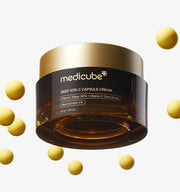
Medicube Deep Vita C Capsule Cream 55g
Format: a face moisturizer with gel and capsule phases; the listing describes adjusting their ratio for a lighter or more cushioned feel. It lists several vitamin C forms and 5% niacinamide, but does not give a separate amount for each vitamin C form. Fragrance appears in the published ingredient list.
View product details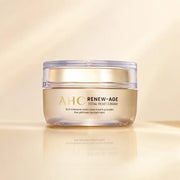
AHC Renew-Age Total Reset Cream 50ml
Format: a rich final-step face moisturizer described for normal-to-dry or dry-feeling skin. Vitamin C derivatives appear within a multi-active formula; the product page does not state their individual concentrations. Its published ingredient information includes fragrance.
View product details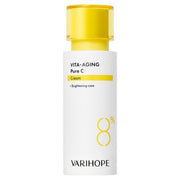
VARIHOPE VITA-AGING Pure C Cream 40ml
Format: the storefront describes an ultra-light face cream and uses “Pure C” in the name. The visible listing does not disclose a concentration or enough detail to compare its vitamin C strength with other formulas, so do not treat the name or marketing phrase as a verified percentage.
View product details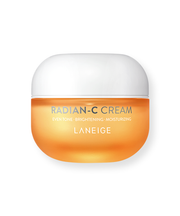
LANEIGE Radian-C Cream 30ml
Format: a face cream presented for a routine that wants Vitamin C within the moisturizer step. The product page labels it a moisturizing cream but does not provide a comparable Vitamin C percentage in the visible listing. Choose by the cream format and confirm the current full ingredient list if a specific molecule matters to you.
View product details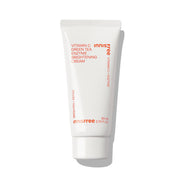
innisfree Vitamin C Green Tea Enzyme Brightening Cream 80ml
Format: a lightweight face cream whose listing names Vitamin C and green tea. The page does not disclose the Vitamin C amount. Although it describes testing for sensitive skin, that is not a guarantee of individual tolerance; check the full ingredient list and patch test if you are reactive.
View product details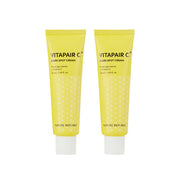
NATURE REPUBLIC Vitapair C Dark Spot Cream 50ml + 50ml
Format: a face cream listing that names Vitamin C, lemon extract, and niacinamide. The product title lists two 50 ml units; verify the pack contents and current ingredient list on the live page. No Vitamin C percentage is given in the visible product details.
View product details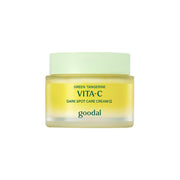
goodal Green Tangerine VITA-C Dark Spot Care Cream ALPHA 50ml
Format: a water-rich face cream with Vitamin C positioned alongside niacinamide and alpha arbutin on the product page. The listing specifies 5% niacinamide but does not separately state a Vitamin C percentage. Use the ingredient panel, rather than a “3X” or rapid-result headline, to compare the formula.
View product details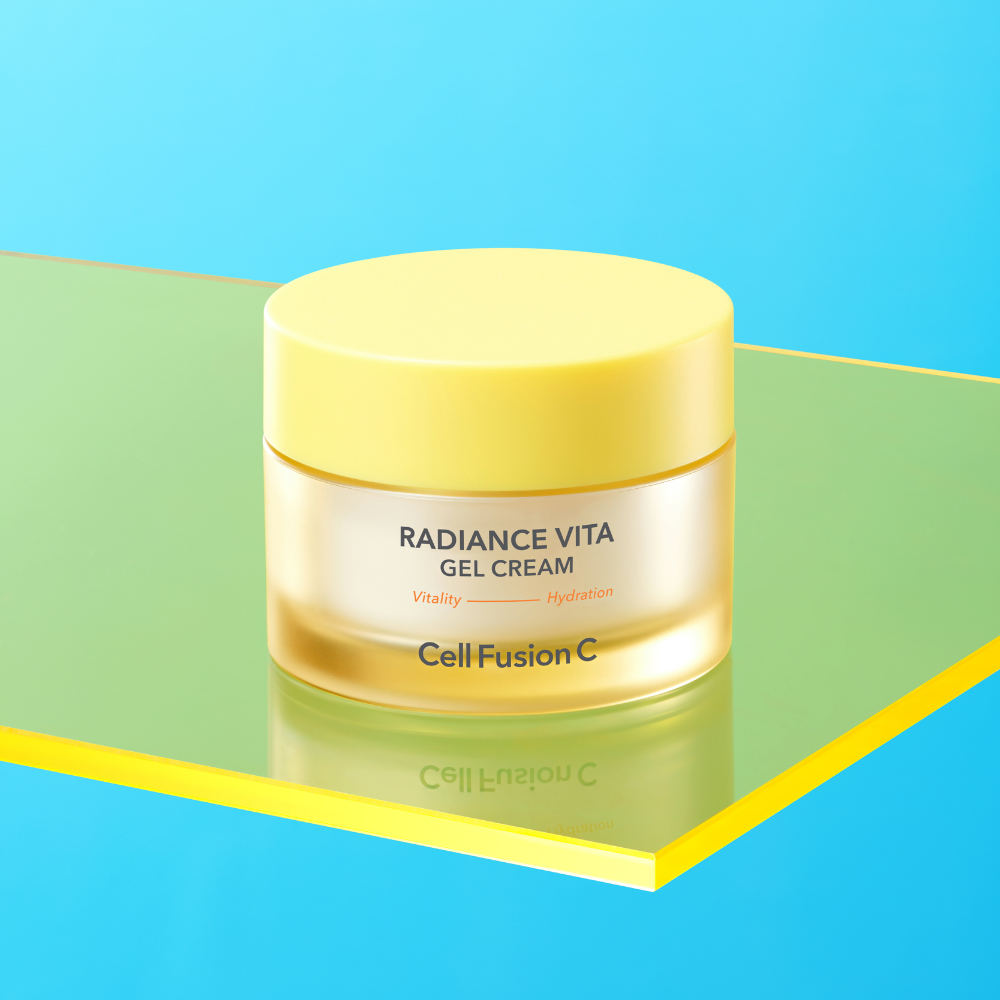
Cell Fusion C Radiance Vita Gel Cream 55ml
Format: a gel cream for readers who prefer a lighter-feeling moisturizer. The store describes Vitamin C and Vitamin B5 in the product story, but the visible page does not disclose a Vitamin C concentration or a finished-product comparison study.
View product details
CENTELLIAN24 Madeca Acnience Cream 50ml
Format: a lightweight face cream marketed for blemish-prone and sensitive skin; the store listing names Vitamin C and tranexamic acid. The visible page does not give a concentration for either. Treat skin-type labels as product positioning, not a promise that every acne-prone or sensitive user will tolerate it.
View product details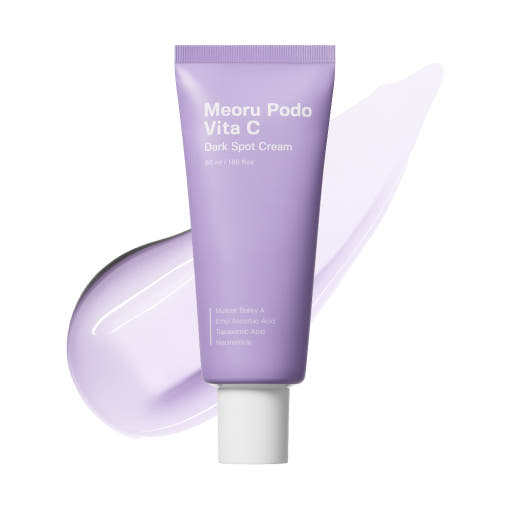
SUNGBOON EDITOR Meoru Podo Vita C Dark Spot Cream 50ml
Format: a face moisturizer with a tube format and grape-water-based cream texture in the product description. The page names Vitamin C but does not state its amount or provide a like-for-like result comparison. Use texture, full labeling, and your tolerance as the deciding factors.
View product details
If you want a treatment layer
Serums, ampoules, pads, and masks are different choices
A serum can be a better fit than a cream when you want a lightweight treatment under a moisturizer. An ampoule may be a concentrated or product-line format, but the word “ampoule” by itself does not tell you the concentration or evidence. Pads are pre-soaked and may combine vitamin C ingredients with exfoliating components. Sheet masks add a time-limited hydrated layer. These formats can be useful for different preferences; none is a more moisturizing face cream simply because it feels wet during use.
When comparing treatment formats, read the directions closely. A leave-on product with strong L-ascorbic acid may need a slower introduction than a low-active hydrating serum. A pad with an exfoliating acid may be too much if you already use an exfoliating toner or prescription retinoid. A sheet mask can provide temporary surface hydration without replacing the routine moisturizer you need afterward. The label and the whole routine matter.
Do not stack every format from a collection into the same morning. Choose one lead treatment step and see whether it fits. You can add a moisturizer for comfort, but adding a second serum, brightening pads, sheet mask, and a tone-up sunscreen all at once increases clutter and makes any irritation hard to trace. The goal is not to maximize the number of vitamin C product names; it is to select an understandable routine.
The next six cards are therefore explicitly marked as adjacent routines. They are real listed products with live PDPs, but readers looking specifically for the best vitamin C moisturizer should focus on the cream cards above and use these only if a separate format is what they actually want.
When a separate treatment is a better fit
A moisturizer is the cream step that supplies the comfort and finish your routine needs. If no Vitamin C face cream has the texture or ingredient disclosure you want, a separate Vitamin C serum or ampoule can sit beneath a plain moisturizer. Pads and sheet masks have different use patterns, and sunscreen is its own daily protection step. This guide keeps those formats out of the moisturizer cards so the product comparison stays true to the question.

Know when a cream is not the answer
15. When to seek professional guidance
Not every dark spot is a routine concern. Seek a clinician’s opinion for a new, changing, bleeding, painful, or nonhealing mark, for sudden widespread pigment change, or when a rash, burning, swelling, blistering, or persistent itch does not improve after stopping a new cosmetic product. Do not try to diagnose a spot from a guide, and do not use cosmetic brightening language to describe treatment of a medical condition.
Melasma, acne-related post-inflammatory hyperpigmentation, sun spots, and irritation-related color change can call for different approaches. Pregnancy, medications, hormonal changes, skin conditions, and previous treatments can also affect what is appropriate. A dermatologist can evaluate the pattern and discuss evidence-based options and risks. A cosmetic cream should not delay evaluation of a symptom that is new or concerning.
For a reaction, stop the newly introduced product and return to a familiar, uncomplicated routine as tolerated. If a reaction is severe, such as facial swelling, widespread hives, breathing difficulty, or blistering, seek urgent medical care. Persistent or recurrent reactions merit medical advice. A “natural” extract can irritate or sensitize; a laboratory-tested ingredient can still bother an individual. Product category does not predict an individual’s allergy history.
If you are using prescription acne treatment, retinoids, or medication for a diagnosed pigmentation disorder, ask the prescriber how a new vitamin C cream fits. That person can account for the exact medication, strength, application schedule, and skin condition. Generic layering advice cannot replace that individualized instruction.
16. A practical three-pass shopping checklist
Pass one: confirm the product is actually a moisturizer
Look at the PDP category and usage directions. Is the product intended to stay on as a face cream or gel-cream? Is it an ampoule, pad, sheet mask, wash-off formula, or sunscreen instead? Does the formula include enough moisture for your skin, or will you still need your regular moisturizer? Is the product paired with a gadget or another item? Separate those questions before comparing prices or claims.
Pass two: understand the vitamin C claim
Check the INCI for the exact form. Does the product disclose a percentage, and is the percentage attached to that specific vitamin C form? Is it pure L-ascorbic acid, a derivative, or a blend? Is there a product-specific human study described with a meaningful outcome? Does the package provide clear storage and use guidance? If the answer is unknown, do not fill the gap with a guess. If your goal is only surface comfort, you may decide that a disclosed percentage is not essential to your choice.
Pass three: picture the routine you will really follow
Do you prefer a light or rich finish? Will it sit under sunscreen and makeup? Are you already using another vitamin C product, retinoid, exfoliant, or acne treatment? Is fragrance a known concern for you? Can you introduce this product alone, rather than alongside three other new items? Will you use sunscreen every morning? Can you check the live product page for its current directions and delivery availability? If those answers are clear, you can choose without needing a universal “best” label.
A simple decision could be: “I want one moisturizing face cream; this formula has a named vitamin C derivative, a texture my skin can tolerate, and an ingredient list I can check. I will use it as directed, keep other actives stable while I introduce it, and continue separate sunscreen.” That is a more dependable plan than buying a cream solely because it is marketed as the strongest.
17. Related ProtoClinical guides
Use these guides to explore vitamin C form, compatible routine layers, and moisturizer texture for different skin preferences. Each answers a distinct follow-up question rather than repeating this face-cream selection framework.
- Vitamin C Derivatives in Korean Skincare: understand why ingredient form and finished formula matter when comparing labels.
- Can You Use Niacinamide With Vitamin C?: check compatibility and layering without relying on a blanket ingredient rule.
- Best Moisturizer for Dry Skin: compare moisturizing texture and support when dryness is the main selection constraint.
- Best Moisturizer for Oily Skin: consider lighter textures and routine feel for oil-prone skin.
- What Is Hyaluronic Acid? Benefits, Limits and How to Use It in a Routine: distinguish a humectant ingredient layer from the broader role of a face moisturizer.
18. Browse the right commercial hub
Each collection has a different shopping job. Open the category that matches the routine step you are choosing, then check each live PDP. Collection membership alone does not establish that an item is a moisturizer, suitable for every skin type, currently in stock, or a substitute for another category.
- Vitamin C skincare: creams, serums, ampoules, pads, masks, and SPF formats.
- Korean face moisturizers: compare face-cream and gel-cream textures.
- Korean serums and ampoules: look for separate leave-on treatment layers.
- Brightening skincare: browse appearance-focused tone-care formulas.
- Dark-spot skincare: compare formats relevant to uneven-looking tone; persistent or changing lesions need clinical review.
- Barrier repair: explore options centered on moisture and skin comfort.
- Korean sunscreen: choose the separate daytime protection step by label and finish.
19. Frequently asked questions
What is the best vitamin C moisturizer for everyday use?
There is no single best formula for every face. Choose a cream with a texture that makes you comfortable using it, a vitamin C form you understand, and an ingredient list compatible with your routine. Check whether the product is a moisturizer or a serum/sunscreen, and do not rank formulas by percentage alone. Use sunscreen separately during the day unless the product is itself a properly labeled sunscreen, in which case follow its directions.
Is a vitamin C cream better than a vitamin C serum?
They fill different routine roles. A serum or ampoule is often a lightweight treatment step, while a cream is designed to provide more moisture and a finishing layer. A cream can include vitamin C, and a serum can be followed by a separate moisturizer. Pick the arrangement you can use consistently. A product’s format by itself does not prove a stronger result.
Is a higher percentage of vitamin C always more effective?
No. Concentration is one part of a specific formula, and the meaning depends on the vitamin C form and what the manufacturer’s percentage describes. The exact vehicle, pH where relevant, stability, packaging, directions, and user tolerance all matter. A higher percentage can also make a product harder to tolerate for some people. Do not assume it is best for your skin.
Can I use vitamin C moisturizer if I have sensitive skin?
Sensitivity varies. A person who reacts to one formula might tolerate another, but neither “derivative” nor “sensitive skin” guarantees a result. Check fragrance and the full ingredient list, introduce one new product at a time, and patch test according to the product’s directions. Stop if symptoms persist or become concerning. Ask a dermatologist for help with recurrent reactions.
Can I use vitamin C moisturizer with retinol?
Some routines include vitamin C and a retinoid at different times, but tolerance and the exact products matter. Do not start both products at once. If you use prescription retinoids or have a skin condition, ask your prescriber whether and how to combine them. If you notice ongoing stinging, redness, peeling, or burning, simplify the routine and seek advice rather than adding more actives.
Should vitamin C go before or after moisturizer?
For a separate thin serum, many people place it before cream. For a vitamin C moisturizer, it is already the cream step. Follow product directions, and consider texture: thin water-based layers often go before thicker creams, but this is a practical default, not a universal rule. Sunscreen goes at the end of morning skincare according to the product directions.
Can vitamin C moisturizer fade dark spots?
Topical vitamin C is used in cosmetic products aimed at a brighter, more even-looking appearance, but results depend on the specific formula and the cause of the spot. No moisturizer can guarantee removal. Sun protection helps reduce ongoing UV exposure. New, changing, painful, bleeding, or nonhealing spots should be assessed by a clinician instead of self-treated as ordinary uneven tone.
Can vitamin C moisturizer replace sunscreen?
No. A moisturizer with vitamin C is not sunscreen unless the product also carries a sunscreen label and directions. Even if a cream includes SPF, use it as a sunscreen in the labeled amount and reapply as directed. For broad-spectrum protection, confirm the product is labeled broad spectrum; vitamin C is not a substitute for UV filters.
Does “vitamin C complex” tell me the exact ingredient?
Usually not. It may refer to several forms, a blend, or a branded mixture. Check the full INCI for names such as ascorbic acid, sodium ascorbyl phosphate, ascorbyl glucoside, or 3-O-ethyl ascorbic acid. If the concentration is not stated, keep that information in the unknown category. Do not infer a high dose from the word “complex.”
Is a cream with multiple vitamin C forms automatically better?
No. More ingredient names do not establish dose, stability, delivery, or better outcomes. A multi-form formula may be a convenient option, but compare the full product and its routine role. If you already use a vitamin C serum, check whether adding another active product would duplicate the same job.
Can I use vitamin C moisturizer every day?
Follow the product’s directions and your own tolerance. A well-tolerated moisturizer can be used daily as labeled, but no schedule applies to every vitamin C formula. Start cautiously with a new leave-on product and avoid increasing frequency just to force a result. Stop and seek advice if irritation persists.
How should I store vitamin C cream?
Follow the manufacturer’s storage instructions, keep the package closed, and avoid exposing it to conditions the label warns against. Do not invent a refrigeration rule. If the product develops a substantial unexpected color change, unusual odor, separation, or damaged packaging, contact the manufacturer and pause use while you clarify. Color alone cannot confirm oxidation because formulas can be tinted for other reasons.
Can pregnant or breastfeeding people use vitamin C moisturizer?
Do not treat this guide as individualized pregnancy or breastfeeding advice. Vitamin C cosmetic ingredients differ from prescription actives, and full formulas may contain additional ingredients. Check the ingredient list and ask your obstetric clinician or dermatologist about the complete product if you are uncertain, especially if the formula includes other active ingredients or you have a skin condition.
Does a moisturizing sunscreen count as a vitamin C moisturizer?
It can contain vitamin C and feel moisturizing, but its primary role is still sun protection. Judge it by the sunscreen label, finish, and application directions. If your skin needs additional moisture, apply a separate cream underneath if that layers comfortably; do not use too little sunscreen to make the product feel like a light moisturizer.
20. Final decision
Start with the role: moisturizer, treatment, or sunscreen. If you want a true vitamin C face cream, read the full PDP and choose by skin feel, exact ingredient disclosure, supporting formula, package guidance, and tolerance rather than the word “best” or the biggest percentage. If you prefer an active serum, keep a plain moisturizer for comfort. Avoid starting multiple new actives together, and use labeled sunscreen as a separate daytime step.
The useful answer to “what is the best vitamin C moisturizer?” is a formula that fits your skin’s moisture needs, your comfort with the disclosed vitamin C form, and the routine you will actually follow. If the product information leaves a key question unanswered, keep that uncertainty visible. If a skin change is new, persistent, or concerning, consult a dermatologist rather than turning a cosmetic cream into a diagnosis.
Evidence and editorial notes
- Pinnell SR, Yang H, Omar M, et al. Topical L-ascorbic acid: percutaneous absorption studies. Dermatol Surg. 2001;27(2):137-142. Study used a pig-skin penetration model and informs formulation context, not consumer product ranking.
- Austria R, Semenzato A, Bettero A. Stability of vitamin C derivatives in solution and topical formulations. J Pharm Biomed Anal. 1997;15(6):795-801. Stability findings are formulation- and condition-specific.
- Campos PMBGM, Gianeti MD, Kanashiro A, et al. In vitro antioxidant activity and in vivo efficacy of topical formulations containing vitamin C and its derivatives. Int J Cosmet Sci. 2008;30(5):369-375. The tested formulations and endpoints cannot be generalized to every commercial cream.
- U.S. Food and Drug Administration. Sunscreen: How to Help Protect Your Skin from the Sun. Use broad-spectrum sunscreen according to label directions and combine with other sun-protection measures.
- ProtoClinical product details were checked on public PDPs at the URLs linked in each card on September 30, 2026. Product formulation, delivery options, price, and availability can change; the live PDP and packaging are the sources for current details.
Editorial scope: This is general cosmetic skin-care information, not medical diagnosis or treatment. Product ingredients and claims are described as published on the relevant product pages, not independently verified clinical outcomes.
0 comments