
Estrogen Face Cream: What to Know Before You Choose One
ProtoClinical Skincare Guide
Prescription hormone therapy and cosmetic skincare serve different purposes. This guide separates the evidence, routes, and product choices.
The short answer
There is no one-size-fits-all "best estrogen face cream" that a skincare shopper can choose by percentage, texture, or online ranking. Estrogen products are hormone medicines when they contain estradiol, estriol, or another active estrogen. Their route, dose, application site, indication, and safety review matter. A product intended for a different part of the body or a different medical use should not be repurposed for facial aging because its packaging says cream or because a social post calls it "bioidentical."
Small clinical studies have explored estrogen-related products on facial skin, but those studies do not establish that a consumer can safely select a hormone cream for cosmetic use. They also do not make every topical estrogen formula interchangeable. A 2026 systematic review on topical estrogen for skin aging is indexed in PubMed, but its PubMed record has no abstract; the record alone cannot support a claim about the review's results. The direct clinical studies that are available are limited in size, duration, and product type.
If your goal is treatment for hot flashes, sleep disruption, vaginal or urinary symptoms, or another menopause concern, discuss hormone and nonhormone treatment options with a qualified clinician. If your goal is surface dryness, comfort, sunscreen protection, or the appearance of fine lines, choose skincare by that cosmetic job. A moisturizer, retinoid, peptide product, or sunscreen is not estrogen therapy, even if it is marketed for mature-looking skin.
First, identify what "estrogen cream" means

People use the same phrase for several very different products. They should not be compared as if they were one skincare category.
Prescription menopausal hormone therapy

Prescription hormone therapy contains an active hormone and is used for defined medical indications. Depending on the product, the medicine may be delivered systemically or locally. Systemic products can include pills, patches, sprays, gels, or other labeled routes. Low-dose vaginal estrogen is used for genitourinary symptoms in the vaginal area. These routes are selected for their labeled uses and a person's health context, not for casual facial application.
The Menopause Society describes hormone therapy as prescription treatment most often used for symptoms such as hot flashes and genitourinary syndrome of menopause. It distinguishes systemic therapy from low-dose vaginal therapy because their intended effects and absorption differ. That distinction is a reason to follow the medicine's label and prescriber's instructions, not a reason to transfer a product to facial skin. See The Menopause Society's hormone therapy overview.
Compounded estrogen products

Some pharmacies make a compounded hormone preparation for a specific patient when a clinician decides it is appropriate. A compounded medicine is not the same as a cosmetic cream, and a marketing phrase such as "custom," "natural," or "bioidentical" does not establish its safety or effectiveness. The FDA explains that compounded topical estradiol products are not reviewed through the same process as FDA-approved products for safety, effectiveness, or quality before they reach patients. The agency is studying absorption from compounded topical products because the amount that enters the body matters. Read the FDA explanation of its compounded-estrogen research.
The word "bioidentical" is not a shortcut for judging quality or deciding whether a product is compounded. In common use, it describes hormones with a molecular structure matching hormones made in the body; some standardized, FDA-approved prescription products fit that description. The Menopause Society notes that bioidentical products do not have to be custom compounded. Ask for the exact drug name and approval status instead of relying on a marketing label. None of those terms establishes that a hormone is intended for facial skin.
Do not buy a compounded hormone cream from an unfamiliar online seller or use another person's prescription. If a clinician recommends a compounded product, ask why a commercially available medicine is not suitable, what site to apply it to, how much to use, how to avoid transfer to other people, and what follow-up is needed. Those are clinician and pharmacist questions, not online-shopping comparisons.
Cosmetic products that mention estrogen-like ingredients
Cosmetic products may use words such as "phytoestrogen," "plant estrogen," "soy," "isoflavone," or "hormone-inspired." These labels do not mean a product contains prescription estradiol. A plant-derived ingredient is not automatically equivalent to a human hormone, and a product's name does not establish that it changes the body's hormone levels. To understand a claim, check the complete ingredient list, the product's stated use, and whether the evidence concerns that exact finished formula or only a laboratory ingredient.
In the United States, intended use helps determine whether a product is regulated as a cosmetic, a drug, or both; FDA explains that "cosmeceutical" is not a legal product category. Most cosmetics do not receive FDA premarket approval, while drugs must meet drug requirements for their intended use. An appearance-oriented moisturizer is not an FDA-approved hormone medicine, and hormone-like marketing words do not establish drug approval. Read the FDA's overview of cosmetic and drug categories and its explanation of cosmetic labeling claims. A prescription hormone is not ordinary skincare simply because it comes in a gel or cream vehicle. When the claim is ambiguous, ask for the active ingredient and intended body site, then confirm its status with a clinician or pharmacist.
What the skin research can and cannot tell you

Menopause can coincide with changes in skin comfort, dryness, thickness, and elasticity. Estrogen has biological roles in skin, and researchers have tested whether topical estrogen-related treatments affect measured skin outcomes. The important question for a shopper is not whether a hormone can interact with skin in a study. It is whether a particular product, used on a particular site and population, has enough evidence and appropriate authorization for the use being considered.
One older clinical trial compared 0.01% estradiol with 0.3% estriol in 59 premenopausal women over six months and measured hydration, profilometry, and selected tissue markers. The investigators reported changes in several measured outcomes. This is a small, product-specific study, not a head-to-head ranking of products sold today. It cannot tell a reader that an arbitrary estrogen cream is appropriate for the face, that a higher percentage is better, or that the same results occur in a different population. The PubMed record for that trial identifies the sample, concentrations, and study duration.
A later double-blind randomized pilot study examined methyl estradiolpropanoate, a particular ingredient studied as an estrogen-like cosmetic, in postmenopausal women who had not used hormone replacement therapy. The study applied its test product to facial skin for 14 weeks and reported improvements from baseline in several appearance measures compared with vehicle. That finding is about that specific ingredient and study design. It does not show that prescription estradiol, estriol, vaginal estrogen, compounded creams, and ordinary anti-aging moisturizers are equivalent. The PubMed record for the pilot study describes the intervention and its limitations.
A systematic review titled "Topical estrogen for skin aging: A systematic review of safety and efficacy" was published in the Journal of the American Academy of Dermatology in 2026. Its PubMed record lists the publication details and keywords but does not provide an abstract. Without the full review text, it would be inaccurate to invent a pooled effect, call the evidence conclusive, or claim that it establishes a safe retail recommendation.
These distinctions matter because cosmetic outcomes and medical safety are not the same endpoint. A short study may measure hydration or a skin marker while being too small or brief to evaluate uncommon harms, long-term use, use over a larger skin area, transfer to a partner or child, or risks for people with a relevant medical history. "No side effects observed in a small trial" is not proof that an ingredient is safe for everyone or that a different product has the same exposure.
How to read the study details as a shopper
Start with the exact intervention. A paper about estriol, estradiol, or methyl estradiolpropanoate does not test every ingredient that a seller calls estrogen-like. Even when two products contain the same named molecule, the vehicle, concentration, applied amount, schedule, and skin site may differ. A percentage by itself is not a reliable way to compare potency or likely exposure across different substances and formulas.
Next, check who was studied and why. The 1996 trial described preclimacteric women, while the MEP pilot studied postmenopausal women who had not taken hormone replacement therapy. Neither description automatically represents every person looking for a face cream, including people with a hormone-sensitive condition, a different medication history, or a different skin diagnosis. A population detail is part of the result, not a footnote to ignore.
Then look at what was measured and against what. Hydration, instrument-measured surface features, clinician ratings, participant impressions, and tissue markers answer different questions. A statistically significant change in one measured endpoint does not automatically mean a visible result that matters to each user. A comparison with a vehicle is more informative than an uncontrolled before-and-after observation for separating the tested ingredient from the base formula, but it still does not tell you whether another product or routine will behave the same way.
Finally, match the time horizon to the question. A study lasting weeks or months can describe outcomes during that period. It cannot by itself establish years-long safety, detect every uncommon adverse effect, or prove safety for a different dose, site, or user. A small study may be useful for generating a research question while remaining too limited to support a broad retail recommendation. The PubMed record for the 2026 systematic review lists its title and publication details but provides no abstract; without its full results, this guide does not infer a pooled effect or a safety conclusion.
For a shopper, the practical takeaway is to look for research on the exact finished formula and intended site, and to separate appearance measurements from medical outcomes. If a source moves from "this ingredient changed a measured skin outcome in a particular study" to "any estrogen face cream is safe and effective," it has crossed beyond what those study details establish.
What "FDA-approved" does and does not mean here

The FDA approves particular drug products for particular uses and routes. That approval does not automatically cover every use of the same active ingredient, every compounded formula, or every body site. A medication prescribed for one indication should not be used on the face for a separate cosmetic goal unless the prescriber specifically directs it.
Hormone therapy guidance also changes as evidence and labeling change. In February 2026, the FDA approved revised boxed-warning language for six menopausal hormone therapy products, removing certain risk statements about cardiovascular disease, breast cancer, and probable dementia from the boxed warning for those products. The agency said people should consult current product labeling for more detailed information about benefits and risks. This update should not be summarized as "hormone therapy has no risks," nor does it turn facial rejuvenation into an approved indication. See the FDA's 2026 labeling announcement and discuss personal treatment decisions with a clinician.
Before you evaluate any product described as estrogen cream, ask:
- What is the exact active ingredient? "Estrogen-like" is not the same as estradiol, estriol, or another prescription hormone.
- Is it a drug or a cosmetic? Find out whether it is prescription, compounded, or an ordinary cosmetic product. Do not infer status from the word "cream."
- What body site and purpose appear on its label? Facial skin, vaginal tissue, and a systemic transdermal route are not interchangeable.
- Who is responsible for the medical decision? For a hormone medicine, that should be a licensed prescriber who knows your health history.
- What does the evidence actually test? Look for the exact ingredient, formula, route, concentration, population, comparison, duration, and measured outcome.
- What is not known? Ask about long-term data, absorption, transfer, interactions, and whether evidence applies to your situation.
- Can you read the full label and ingredient list? If the seller will not identify the active ingredient, intended route, or responsible prescriber, do not treat the product as a routine skincare purchase.
Choose by the result you want, not by the word "estrogen"

For many people, the real concern behind this search is dry, tight, dull, or more easily irritated skin. Those concerns can be addressed without trying to self-prescribe a hormone.
If the main issue is dryness or tightness

Use a mild cleanser that does not leave the face feeling stripped, then choose a moisturizer with a texture you can apply consistently. Humectant ingredients attract water to the outer skin layers; emollients help soften rough feel; occlusive ingredients reduce water loss at the surface. A cream may feel more protective than a thin lotion, but comfort and tolerance are more useful selection criteria than a promise that one format is best for everyone.
If new dryness started after a medicine change, a hormone transition, a new active, or a change in climate, do not stack several strong products to "correct" it. Simplify the routine, pause products that sting, and add one change at a time. Persistent burning, swelling, a rash, or cracking deserves medical advice rather than another shopping experiment.
If the concern is sun-related uneven tone or visible aging
Use a broad-spectrum sunscreen that you can apply generously and reapply as directed by its label. Sunscreen helps limit ongoing ultraviolet exposure; it does not reverse all existing changes, and it is not hormone therapy. A product that pills, stings, or feels too heavy may not be the one you will use every day, so texture is a practical part of the decision.
If the goal is fine-line appearance
Some people discuss topical retinoids with a clinician or choose an over-the-counter retinol cosmetic. These are not estrogen products. Retinoids can irritate, and an ingredient's percentage alone does not predict how a finished formula will feel. Start with the product label, avoid combining several irritating actives at once, and seek professional guidance if you are pregnant, trying to become pregnant, breastfeeding, have a skin condition, or are uncertain which route is appropriate for you.
If the concern is sudden, persistent, or uncomfortable
New rash, itch, persistent redness, painful breakouts, a changing spot, or a skin change that does not settle with gentle care may have a cause that a moisturizer cannot address. A dermatologist can distinguish a barrier problem from dermatitis, infection, medication effects, sun damage, or another condition. A product page cannot make that diagnosis.
A simple routine while you sort out the hormone question

Morning: rinse or cleanse gently if needed, apply a comfortable moisturizer, then use broad-spectrum sunscreen. If you use a cosmetic serum, it is optional. Do not add one just because a product promises to "balance" hormones.
Evening: remove sunscreen and makeup with a cleanser your skin tolerates, apply moisturizer, and use at most one active product if it fits your skin and label directions. If a new active causes burning or persistent redness, stop it and seek advice rather than pushing through.
Change one thing at a time. Keep the rest of the routine steady for a couple of weeks when possible. This makes it easier to spot irritation and prevents several new products from obscuring the cause. Do not test a prescription hormone this way; follow the prescriber's plan.
Nonhormonal skincare examples from the ProtoClinical catalog
The products below are examples of ordinary cosmetic formats a shopper might compare when the goal is moisturization or a comfortable routine. They are not estrogen products, hormone therapy, or substitutes for a prescribed treatment. Their listing, formula, ingredients, image, and availability can change. Read each current product page and use its directions. The cards should not imply a medical benefit.
Nonhormonal cosmetic
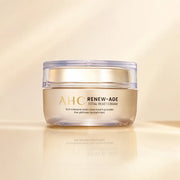
AHC Renew-Age Total Reset Cream 50 ml
Cream format for shoppers who prefer a richer moisturizer.
View product
Nonhormonal cosmetic
CENTELLIAN24 Proceutical MD Cream 100g
Larger cream format; compare the current ingredient list and texture.
View product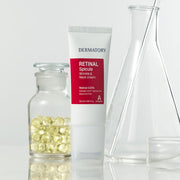
Nonhormonal cosmetic
DERMATORY Retinal Spicule Neck Cream 50ml
Neck-cream format with a retinal claim; follow its label.
View product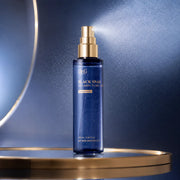
Nonhormonal cosmetic
Dr.G Black Snail Collagen Mist Serum 100 ml
Mist format for a light layer; not an estrogen treatment.
View product
Nonhormonal cosmetic
Dr.G Black Snail Emulsion 150 ml
Fluid emulsion format between a thin serum and richer cream.
View product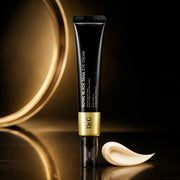
Nonhormonal cosmetic
Dr.G Royal Black Snail Eye Cream 30 ml
Eye-area format; use only as directed on its current label.
View product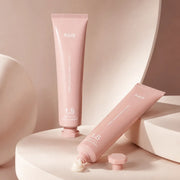
Nonhormonal cosmetic
Abib PDRN Intensive Cream 1.5 75ml
Tube cream format for comparing richer leave-on products.
View product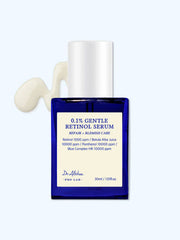
Nonhormonal cosmetic
Dr.Althea 0.1 Gentle Retinol Serum 30ml
Retinol serum, a separate cosmetic active with its own use considerations.
View product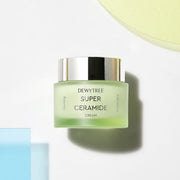
Nonhormonal cosmetic
DEWYTREE Super Ceramide Cream 50ml
Cream format when moisturizer feel and barrier support are priorities.
View product
Nonhormonal cosmetic
MEDIPEEL Meso Collagen Toner 1000ml
Toner format; it does not replace a moisturizer or hormone medicine.
View productReview official product categories only after deciding which cosmetic job you need: retinol and vitamin A, peptides, collagen, sunscreen, and serums and ampoules. These are shopping hubs, not clinical evidence. They do not establish that a product contains a hormone or can substitute for hormone therapy.
Questions to bring to a clinician or pharmacist

If you are already using or considering a hormone product, take the package or a clear photograph of its full label to your appointment. Ask which ingredient is active, what condition it is intended to treat, which body site is intended, how much is prescribed, how to avoid transfer, and what side effects or follow-up matter for your history. If someone recommends applying a product intended for a different site to the face, ask whether that is an off-label use and what evidence supports that specific plan.
For a product bought online, ask who made it, whether a prescription is required, who is responsible for medical screening, and whether the product is a regulated drug or a cosmetic. A site that uses medical words but hides the active ingredient or the prescriber's identity is not giving you enough information to make a safe comparison.
The FDA's 2026 label update is one more reason to consult current information instead of relying on an old viral post. Some label language changed, but the FDA directs patients and clinicians to the detailed labels to understand product-specific risks and benefits. Do not start, stop, or change prescribed hormone treatment based on a skincare article.
When to seek care

Talk with a menopause-informed clinician if you are considering hormone therapy for menopause symptoms or if you have a medical history that affects its risks and benefits. Ask a dermatologist about a persistent skin reaction, severe dryness, a new or changing lesion, unexplained swelling, or a symptom that worsens after a new medicine or product. Seek prompt care for a severe allergic reaction or rapidly worsening symptoms.
For routine appearance goals, a dermatologist can help compare nonhormonal options and set realistic expectations. A consultation can also help separate dryness, sun damage, fine lines, pigmentation, and a medical rash, which often need different approaches. The practical choice is the least complicated route that matches your actual concern and that you can use safely.
Frequently asked questions
Is estrogen face cream the same as estrogen replacement therapy?
No. A cosmetic cream can be marketed for appearance without being a hormone medicine. Prescription hormone therapy contains an active medicine and has a specified route and intended use. Check the exact active ingredient and label rather than relying on phrases such as "hormone-inspired" or "natural."
Can I put vaginal estrogen or a body gel on my face?
Do not repurpose a medicine for facial use unless the prescriber specifically tells you to. Products designed for vaginal, systemic, or other routes have different directions and exposure. Ask the prescribing clinician or pharmacist before changing the application site.
Does research show that topical estrogen can change facial skin?
Some small studies have reported changes in measured skin outcomes with specific estrogen-related interventions. Their formulas, study populations, duration, and endpoints are narrow. They do not establish a safe, universally appropriate retail estrogen cream or a dose for personal use.
Are plant estrogens the same as estradiol?
No. A plant-derived ingredient or a "phytoestrogen" claim does not make a product equivalent to prescription estradiol. Evidence about one ingredient also does not prove that a finished cosmetic product delivers a specific clinical effect.
What can I use for menopausal facial dryness instead?
Start with a gentle cleanser, a moisturizer whose texture you tolerate, and daily sunscreen. A dermatologist can help if dryness is persistent, painful, or accompanied by inflammation. These steps can support comfort and routine consistency; they do not replace hormone treatment for menopause symptoms.
Did FDA remove all hormone-therapy risks in 2026?
No. FDA approved changes to the boxed-warning language for six menopausal hormone therapy products in February 2026 and directs patients to current product labels for detailed benefits and risks. That is a change in labeling, not proof that all products have identical risks or that hormone therapy is appropriate for every person.
Should I choose the product with the highest estrogen percentage?
No. Comparing hormone concentration as though it were a cosmetic strength contest is unsafe. Products, routes, and intended uses differ. A clinician must determine whether a hormone medicine is appropriate and how a specific product should be used.
Evidence and source notes
- U.S. Food and Drug Administration. Evaluating quality and performance of extemporaneously compounded estrogen hormone products.
- U.S. Food and Drug Administration. FDA approves labeling changes to menopausal hormone therapy products, February 12, 2026.
- The Menopause Society. Hormone Therapy.
- Farkas E, et al. Topical estrogen for skin aging: A systematic review of safety and efficacy. J Am Acad Dermatol. 2026;94(1):212-215. PubMed record has no abstract.
- Schmidt JB, Binder M, Demschik G, Bieglmayer C, Reiner A. Treatment of skin aging with topical estrogens. Int J Dermatol. 1996 Sep;35(9):669-674. doi: 10.1111/j.1365-4362.1996.tb03701.x. PMID: 8876303. Small clinical trial; results apply to the tested formulations and study population.
- Draelos ZD. A double-blind randomized pilot study evaluating the safety and efficacy of topical MEP in the facial appearance improvement of estrogen deficient females. J Drugs Dermatol. 2018 Nov 1;17(11):1186-1189. PMID: 30500138.
0 comments