
What Are Wrinkles? How Skin Folds Form and What Skincare Can Change
Wrinkles are lines, creases, or folds in skin. Some show mainly when a facial muscle moves; others remain visible while the face is relaxed. Aging, repeated movement, ultraviolet exposure, and other influences shape how they appear. Skin care can support comfort and soften the look of some fine lines, but no cream erases every crease or stops ordinary skin aging.
What is a wrinkle?
A wrinkle is a visible line, crease, ridge, or fold in skin. It may appear at rest, deepen with facial expression, or occur on body areas that bend and move. "Fine line" often describes a shallower crease, while "wrinkle" or "fold" may describe a more noticeable indentation; everyday use is not a precise grading system. Wrinkles are normal features of living skin. They do not by themselves mean that skin is unhealthy, and treatment is optional.
People use wrinkle, line, crease, fold, and texture as if they were interchangeable, but the words point to different observations. A line between the eyebrows that appears during a frown behaves differently from a crease that remains when the face is still. Dryness can make existing lines stand out temporarily without causing the same kind of persistent change. Understanding the distinction helps make product claims easier to evaluate.
A visible shape, not a diagnosis
A wrinkle is a change in the visible contour of skin. It can look like a narrow line, shallow groove, wider crease, or fold. It may sit beside an eye or mouth, cross the forehead, run along the neck, or appear on the hands and other body sites. The word describes appearance; by itself it does not explain the cause, the depth beneath the surface, or whether a person needs care.
Clinicians and researchers sometimes use more specific terms for particular patterns or mechanisms. In everyday skincare conversations, however, the boundary between a fine line and a wrinkle is not a universal ruler. Lighting direction, facial expression, camera distance, skin moisture, and how long someone has looked at the area can alter what seems visible. Two people can use the same word while noticing different features.
Cleveland Clinic describes wrinkles as lines, folds, creases, or ridges that can occur anywhere, most commonly on the face, neck, arms, and hands. Lines may be visible while skin is relaxed and become more noticeable when facial muscles move. That description includes both shape and behavior rather than implying that all wrinkles form in one way.


Fine lines, expression lines, static wrinkles, and folds
The terms below help describe what a person sees. They are practical language, not a self-diagnosis checklist or a strict scale of severity.
Fine lines
Usually means shallow, narrow creases closer to the surface. They may look more obvious when the outer skin is dry or light falls across the face from the side. "Fine" describes appearance, not a promise that a cosmetic product can make the line disappear.
Expression or dynamic lines
These become more visible as facial muscles contract during smiling, squinting, frowning, or raising the brows. A line mainly present during movement may look different from one that remains when the face is relaxed. Expression is normal; the term is descriptive, not a criticism of someone's habits.
Static lines
These remain visible when the face is at rest. Over time, a crease that once showed mostly with movement may be visible for longer. Age-related changes, accumulated sun exposure, skin structure, and individual biology can contribute; a mirror check cannot identify one cause.
Folds and grooves
Some visible contours are broader folds shaped by the way skin, soft tissue, facial structure, and movement meet. A fold is not simply a "deeper fine line." Facial features such as folds from the sides of the nose toward the mouth have their own names and anatomy.
Facial movement contributes to some crease patterns, but it is not the only influence. Sun exposure, age, inherited characteristics, body location, and skin hydration all matter. No one needs to avoid smiling or squinting to prevent ordinary skin aging. Any advice that frames normal expressions as a personal failure turns an anatomical observation into an unnecessary judgment.
Why the surface can crease
Skin is not a sheet laid over a fixed frame. The outer epidermis renews and acts as a protective barrier. Beneath it, the dermis contains structural proteins and other components that help give skin strength and elasticity. Deeper tissue and facial anatomy also affect contour. The exact details vary across body sites; eyelid skin, the neck, the back of the hand, and the cheek do not behave identically.
Collagen contributes support; elastic fibers help skin stretch and recoil. These structures change with age and can be affected by ultraviolet radiation. Skin also holds water in its outer layers. When that surface is dry, it may look rougher and fine lines can appear more obvious. Rehydrating the surface can improve its look and feel, but it does not rebuild every deeper structure that changed over many years.
Movement matters because skin folds temporarily where muscles pull and where joints bend. With time, the balance between repeated movement, support, repair, sun exposure, and individual biology changes. Lines can then remain visible for longer, including when the muscle is relaxed. A moisturizer acts at the surface; it does not work like a filler placed beneath a fold, a medicine that changes muscle activity, or a procedure that resurfaces damaged skin.
This distinction between surface appearance and deeper structure is a useful way to read product claims. A moisturizer can reduce water loss and improve softness. It cannot be assumed to change facial anatomy or to produce a procedure-like result.


One face, different moments
A crease seen during a smile and a line visible while relaxed are observations at different moments. Facial movement is part of communication. A useful skincare discussion starts with a person's own goals and comfort, not with a demand to stop expressing emotion.

Wrinkle patterns are shaped by the area
Location offers context, but does not prove the cause. Facial skin moves often and receives varied amounts of sun. The neck bends and turns; hands flex and are frequently exposed; elbows and knees fold as joints move. A visible line on a body site can be ordinary skin anatomy, a bend-related crease, or a change associated with age and exposure. One broad label cannot capture all of those differences.
| Common description | What someone may notice | Useful context |
|---|---|---|
| Forehead lines | Horizontal lines, sometimes more visible when brows lift | Expression, skin support, lighting, and age can all influence visibility. |
| Between-brow lines | Vertical or angled lines during a frown, sometimes visible at rest | They often move with brow muscles; appearance varies among people. |
| Outer-eye lines | Fine creases that may show when smiling or squinting | The area is mobile and delicate; products intended for the face are not automatically suitable close to the eye. |
| Lines around the mouth | Small creases, folds, or grooves near the lips | Movement, facial structure, sun exposure, and soft-tissue changes may each play a role. |
| Neck and hand lines | Horizontal neck creases or lines on the back of the hands | Bending, movement, and cumulative exposure vary by person and site. |
Named facial folds are not interchangeable with every wrinkle. For example, a groove beside the nose and mouth follows the contour of facial tissues and often persists regardless of a topical product. Understanding what a feature is can prevent a person from buying an eye cream, serum, or moisturizer expecting it to change a different kind of contour.
Several influences meet over time
Age-related change. Skin's structure and behavior change through life. MedlinePlus notes that aging skin can become thinner and lose some fat, making it less plump and smooth. Those shifts do not happen on one schedule or look the same for everyone. Age is not a skin type, and a birthday cannot tell someone what products they need.
Ultraviolet exposure. Sunlight is a major contributor to premature skin aging. Repeated UV exposure can damage structural components and contribute to photoaging, which may show up as lines, uneven tone, roughness, or loss of firmness. The amount and pattern of exposure differ across a lifetime. Sun protection is relevant to skin health even when someone is not trying to change a wrinkle.
Facial movement. Forehead, brow, and outer-eye lines can become more prominent with habitual expressions. Cleveland Clinic describes how small muscle contractions contribute to common patterns. This is not a reason to police facial movement or blame an individual for natural lines; it explains why some lines change when a person smiles or squints.
Smoking and other influences. MedlinePlus and Cleveland Clinic describe smoking as a contributor to earlier wrinkling. Genetics, body site, general health, environment, and personal exposure history also make outcomes variable. A general article cannot estimate the contribution of any one factor for a reader.
Wrinkles are not a simple record of whether someone "took care of" their skin. A person can protect their skin diligently and still develop lines because aging and facial movement continue. Conversely, two people with similar routines may show different patterns due to biology, exposure, health, or chance. Skin care is one part of a person's habits, not a measure of virtue or effort.


Can dehydration cause wrinkles?
Dry skin can look dull, feel tight, or show fine surface lines more clearly. A comfortable moisturizer may soften that temporary appearance by supporting the outer barrier and reducing water loss. The American Academy of Dermatology notes that moisturizing traps water in the skin and can reduce the appearance of some fine lines; this is a surface effect, not a permanent change to deeper tissue. If a line looks less obvious after moisturizing, it does not mean a structural wrinkle has been permanently reversed; it means surface hydration affected how the area looked.
Lighting matters too. Bright light from one side creates shadows along ordinary pores and contours. Diffuse front-facing light can make the same face look smoother. Phone cameras, facial tension, makeup, sleep, and how long a person has been examining a feature can alter perception. Photos taken under different conditions are poor proof that a product caused a lasting transformation.
For a useful personal comparison, keep lighting, expression, distance, and time of day similar. Take a break from repeated close-up checking; the goal is to notice comfort and meaningful change, not find a flawless surface. If dryness is persistent, painful, very itchy, or accompanied by a rash, seek appropriate clinical advice rather than simply adding stronger anti-aging products.
A product that temporarily plumps the surface through hydration may be pleasant and useful; that outcome is not trivial. Comfort can matter even when a crease remains. It is simply a different outcome from permanent removal, and honest product descriptions should keep those claims separate.
What skincare can change, and what it cannot
Skin care can help protect the surface, reduce dryness, and improve the appearance of certain signs of sun damage. The American Academy of Dermatology says topical retinoids may help some mild fine lines and wrinkles. Results vary, irritation is possible, and the words "anti-aging" on a jar do not demonstrate that a product can lift tissue, change facial structure, or remove a deep fold.
Sun protection addresses future exposure. The AAD recommends a broad-spectrum sunscreen with SPF 30 or higher, and water resistance when swimming or sweating. Shade and protective clothing add practical protection. Sunscreen helps reduce further UV damage; it is not a cosmetic eraser, and one missed application does not determine someone's future skin.
Moisturizer supports comfort. A formula that suits the person's skin can reduce dryness and make the surface feel smoother. The best texture is one that feels comfortable enough to use as directed. Hydration does not permanently fill a deep crease, but it can be a useful and comparatively simple part of a routine.
Retinoids are a separate decision. Retinoid is an umbrella term; retinol is one type. Prescription tretinoin is not interchangeable with a cosmetic retinol serum. The AAD says retinoids may suit some people with mild fine lines, but dryness, allergy, redness, or irritation can make them a poor fit. Retinoids should not be used during pregnancy. Ask a clinician about personal suitability if pregnant, trying to conceive, breastfeeding, managing a skin condition, or using prescription products.
Start with the product directions rather than a popular schedule. Introduce one leave-on retinoid at a time and avoid stacking several just because they appear in different formats. Stop if irritation is persistent or severe and ask a qualified professional what to do. People with deeper skin tones should also pay attention to irritation; the AAD notes that irritation may trigger dark marks in skin of color. Starting cautiously and using moisturizer can help, but it does not guarantee that irritation will not happen.
Peptides, collagen, and "lifting" claims need context. A peptide name or collagen wording on a package does not establish that a topical formula rebuilds deep support structures. Formulas can moisturize or condition skin, and individual products may be marketed with appearance claims, but those claims are not a guarantee or equivalent to procedures. Read what the product is, how it is meant to be used, and what the available evidence actually measures.


Build a routine around a real need
Start with the outcome you want. "I want less tightness" differs from "I want to prevent further sun damage" or "I want to understand an expression line." A routine does not need a product for every visible feature. Too many new products at once make it harder to tell what helps, what irritates, and what is unnecessary.
- Choose a reliable baseline. Cleanse as needed, moisturize if it helps comfort, and use a daytime sunscreen suited to its label and your use. Keep the plan manageable.
- Change one variable at a time. If you decide to add an active, follow its label. Do not layer several retinoids just because they appear in different formats.
- Track comfort before chasing smoothness. Persistent burning, swelling, peeling, or marked redness suggests that a product may not be a good fit. Stop and seek advice when symptoms are significant.
- Give the routine a fair evaluation. Cosmetic changes are gradual and limited. Compare under similar conditions and consider whether the product makes daily care more comfortable.
If the routine causes stinging or persistent dryness, simplify rather than adding more actives to compensate. Comfort and sun protection are useful outcomes even if a crease remains. If choosing an active feels uncertain, ask a board-certified dermatologist or another qualified clinician to review your options.
Professional options have different mechanisms and risks
For a person who wants to change the appearance of a persistent line or fold more substantially, a dermatologist can explain options that go beyond a cosmetic moisturizer. Depending on the pattern and the person's health, a professional discussion may include prescription retinoids, resurfacing procedures, neuromodulators, fillers, or other treatments. They are not interchangeable: they act in different ways, address different concerns, and carry specific side effects and aftercare.
A consultation should include your goal, medical history, medications, skin sensitivity, previous reactions, and realistic expectations. Ask who will perform a procedure, what training they have, what result is likely, how long it may last, what recovery involves, and what can go wrong. No procedure is required to make ordinary wrinkles acceptable; choosing not to treat them is a complete option.
This guide cannot determine whether a feature is a wrinkle, another type of skin change, or a condition that needs evaluation. A new, rapidly changing, painful, bleeding, itchy, inflamed, or otherwise unusual area deserves clinical attention instead of an assumption that it is ordinary aging.

Compare products by label and routine role
These official listings show different formats people may encounter while researching retinoids, daily UV protection, or a supportive serum or cream. They are examples from a store catalog, not clinical recommendations or proof that a product will change a wrinkle. Check the current label, intended area, directions, ingredients, and availability on each product page.
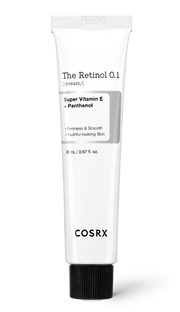
COSRX The Retinol 0.1 Cream 20ml
Cream-format listing; compare the labeled concentration and directions, not a number alone.
View product
COSRX The Retinol 0.3 Cream 20ml
A same-brand listing for comparing a disclosed label and format; a higher percentage is not a universal suitability score.
View product
Anua Nano Retinol 0.3% + Niacin Renewing Serum 30ml
The Anua brand page identifies niacinamide in this retinol serum; confirm the current package's ingredient list and directions. Brand ingredient information.
View product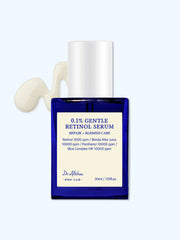
Dr.Althea 0.1 Gentle Retinol Serum 30ml
"Gentle" is part of the product name, not a guarantee against irritation; compare directions and your tolerance.
View product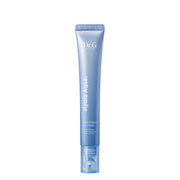
Dr.G Hydra Aqua Retinol Eye Cream 20ml
The listing is labeled for eye-area care; check intended use rather than treating it as a face-serum substitute.
View product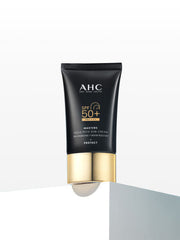
AHC Masters Aqua Rich Sun Cream SPF50+ PA++++ 50ml
A cream-sunscreen example; compare its protection label and the listed lightweight texture description.
View product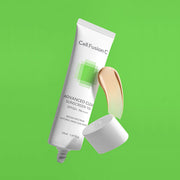
Cell Fusion C Advanced Clear Sunscreen SPF50+ PA++++ 50ml
A separate SPF listing with a matte-finish description; compare finish and label details for daily wearability.
View product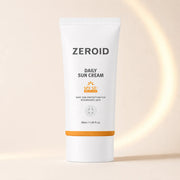
ZEROID Daily Sun Cream SPF50+ PA++++ 50ml
A cream-format SPF example. The protection label and product directions-not a wrinkle promise-are the relevant comparison points.
View product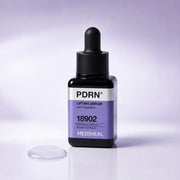
MEDIHEAL PDRN Lifting Serum with Squalane 40ml
Non-retinoid serum-format example. "Lifting" is part of the listing name, not proof of procedure-like structural change.
View product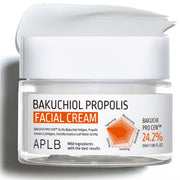
APLB Bakuchiol Propolis Facial Cream 55ml
A face-cream listing naming bakuchiol and propolis; it is not evidence that bakuchiol duplicates a prescription retinoid.
View productExplore by routine or ingredient category
These public collections help compare catalog formats. They do not replace a clinician's advice or establish an ingredient's clinical effect.
Wrinkle questions, answered plainly
What are wrinkles, in simple terms?
They are lines, creases, ridges, or folds visible in skin. Some show mainly with movement; others remain visible at rest. Wrinkles are a normal feature of aging and do not automatically require treatment.
Are fine lines and wrinkles the same thing?
People often use the words loosely. Fine lines usually means shallower creases and wrinkle can mean a more noticeable crease or fold, but there is no single everyday cutoff used by everyone.
Can smiling cause wrinkles?
Facial movement can make some lines more visible. That does not make smiling harmful or mean that a person should suppress expression. Age, UV exposure, skin structure, and individual variation also matter.
Can moisturizer remove wrinkles?
Moisturizer can improve dryness and make fine surface lines look less prominent temporarily. It cannot reliably erase a persistent crease or restore deeper support structures.
Can sunscreen reverse wrinkles?
Sunscreen helps reduce further UV exposure and the risk of additional photoaging. It is a prevention step, not a way to remove lines already present. Follow the label and choose broad-spectrum protection appropriate to your needs.
Do retinol creams work on wrinkles?
Some retinoids may modestly improve the appearance of mild fine lines for some people. Product type, use, tolerance, and consistency matter. Retinol is not the same as prescription tretinoin, and irritation is possible.
Are wrinkles a sign of unhealthy skin?
Not by themselves. Wrinkles are a common part of normal skin aging. Treatment is optional and depends on a person's goals, not on a requirement to look younger.
When should I ask a dermatologist?
Ask when you want help choosing a treatment or weighing risks. A changing, painful, bleeding, itchy, inflamed, or otherwise unusual spot should be assessed instead of assumed to be an ordinary wrinkle.
Evidence behind this guide
This article summarizes general educational sources. It is not medical advice and does not assess an individual's skin.
- Cleveland Clinic: Wrinkles & Fine Lines: Types, Causes & Prevention.
- NIH MedlinePlus: Aging Skin | Sunlight.
- NIH MedlinePlus: Wrinkles.
- American Academy of Dermatology: Anti-aging skin care.
- American Academy of Dermatology: Retinoid or retinol?.
- American Academy of Dermatology: How dermatologists treat sun-damaged skin.
- American Academy of Dermatology: Choosing the right sunscreen.
- American Academy of Dermatology. Wrinkle remedies: How to reduce the signs of aging.
0 comments